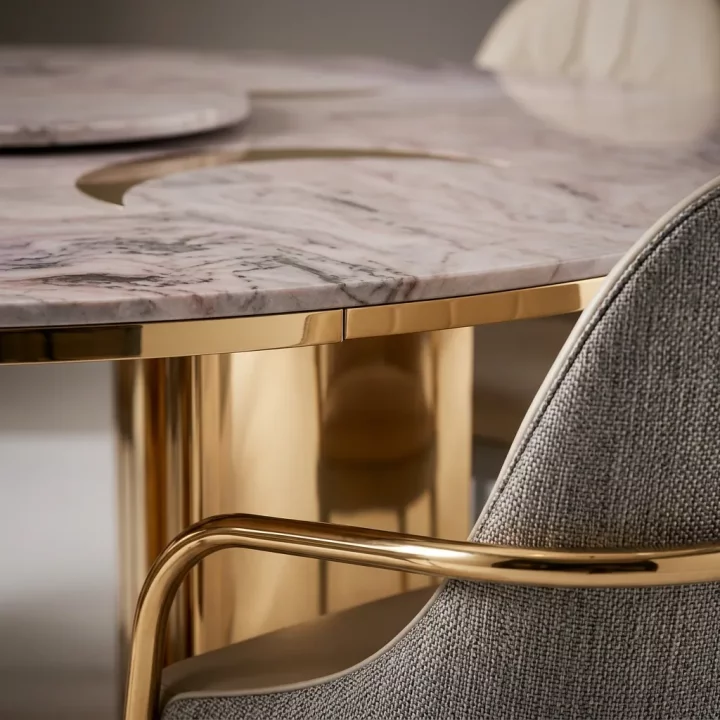
Advantages, Disadvantages, Price Criteria, and Custom Production Options
Porcelain tables have become an increasingly preferred furniture category in both residential and commercial spaces in recent years. Combining the elegance of natural stone with the durability of porcelain ceramic, these tables offer an attractive alternative for users with high aesthetic expectations. However, like every high-performance material, porcelain tables have their own advantages, limitations, and selection criteria. What size is right, what thickness is sufficient, should the surface be matte or glossy, and does the price difference really correspond to a difference in quality? The answers to these questions are often found not in sales brochures, but in material knowledge, manufacturing standards, and real-life usage scenarios. In this guide, we examine porcelain tables from every angle: from material properties and ease of maintenance to price criteria, bespoke production options, consumer trends in the Turkish market, and model selection from an expert perspective. By also considering a production approach inspired by Italian design principles, we aim to provide readers with a solid basis for making an informed choice.
What Is a Porcelain Table and Why Is It So Popular?
A porcelain table is a furniture category whose surface is made from ceramic or full-body porcelain slabs and is increasingly embraced by modern interior architecture. Unlike traditional wood or marble surfaces, porcelain is fired at very high temperatures, resulting in an extremely dense and non-porous structure. This technical property directly determines the table's durability in everyday use.
Key Features of Porcelain Tables
- Scratch and abrasion resistance: Porcelain ranks relatively high on the Mohs hardness scale, providing strong protection against scratches that may be caused by metal objects such as cutlery.
- Heat and UV resistance: The surface resists discoloration from hot serving dishes and direct sunlight, making it suitable for both indoor and outdoor use.
- Hygienic surface: Thanks to its non-porous structure, porcelain does not easily retain bacteria or moisture, offering an important hygienic advantage for dining spaces.
- Aesthetic variety: Different surface effects such as marble, concrete, wood, and plain matte finishes can be created through digital printing technologies used on porcelain slabs.
Why Has It Become So Popular in Türkiye?
Several key factors have contributed to the growing interest in porcelain tables in residential projects and corporate spaces across Türkiye. Interior architects particularly recommend low-maintenance, visually impactful surfaces for frequently used dining areas and meeting spaces. During interior architecture services, defining the material choice at the beginning of the project significantly reduces manufacturing and installation errors for surfaces such as porcelain that often require custom dimensions. At this point, brands such as Starmobi, which use Italian materials and draw inspiration from Italian design language, can be attractive to buyers seeking both aesthetic and technical guidance.
In conclusion, porcelain tables are among the rare furniture categories that combine longevity, easy maintenance, and design flexibility. However, as with any material, certain limitations should not be overlooked: the risk of breakage under heavy impact and a cooler tactile feel compared with marble are factors that should be evaluated before purchasing.
The Difference Between Porcelain Tables and Ceramic, Marble, and MDF-Veneered Surfaces
Choosing a tabletop surface is not merely an aesthetic decision; it is also a technical choice that directly affects long-term comfort, ease of maintenance, and compatibility with the space. Four main surface materials commonly encountered in interior architecture projects in Türkiye—porcelain, ceramic, marble, and MDF veneer—stand out for different priorities.
Porcelain and Ceramic: Similar Appearance, Different Performance
Although porcelain and ceramic may appear deceptively similar, their manufacturing processes differ. Porcelain is fired at a higher temperature, which gives it significantly greater density and hardness than ceramic. This difference translates directly into advantages in water absorption, scratch resistance, and service life. Ceramic surfaces may be more economical, but under heavy use they can be less successful at maintaining surface integrity over time.
Marble: High Prestige, High Maintenance
Marble is preferred especially in projects that aim to reflect an Italian design language thanks to its natural texture and luxurious appearance. However, because of its porous structure, it is sensitive to acidic drinks, stains, and moisture. As architect Elif Şahin notes, “Because marble surfaces require routine maintenance, they make more sense in lightly used spaces such as formal reception rooms rather than commercial areas.” Porcelain, by contrast, can reproduce the look of marble—including veining and tonal depth—without the same degree of natural-stone fragility.
MDF Veneer: Affordable, but Limited in Durability
MDF-veneered surfaces provide designers with flexibility through a broad range of colors and textures; however, their resistance to heat, moisture, and impact is limited. Especially when long-term use is expected from a dining table, their durability profile generally falls behind porcelain or marble.
Which Surface Is Best for Which Use?
- Heavy daily use: Porcelain stands out with its scratch and stain resistance.
- Prestige and aesthetic priority: Marble can be chosen for an elegant, high-end atmosphere, but a maintenance plan should be considered.
- Budget-focused projects: Ceramic and MDF veneer offer a reasonable starting point, although long-term durability expectations should be adjusted accordingly.
In bespoke table projects, material selection should be considered together with the size of the space, frequency of use, and maintenance habits. Project-based work carried out within interior architecture services plays a decisive role in prioritizing these criteria correctly.
Advantages of Porcelain Tables
Porcelain tables have become increasingly popular in both residential and commercial projects in recent years. This trend is not accidental; it is driven by the concrete advantages offered by the material. In the context of Italian furniture design, porcelain is not only an aesthetic choice but also a technically informed engineering decision.
Superior Durability and Scratch Resistance
Porcelain surfaces are produced through a sintering process under high heat and pressure. This makes the surface extremely hard and resistant to scratching. In daily use, it is difficult for knives, forks, or keys to leave visible marks. The long-established Italian concept of “usable beauty” is especially relevant here: design should not restrict practicality.
Hygiene and Easy Cleaning
Thanks to its non-porous structure, a porcelain tabletop does not easily absorb bacteria or stains. This feature is particularly important in dining room use. The fact that it can usually be cleaned simply with a damp cloth offers a major advantage for both residential users and high-traffic commercial spaces such as restaurants and hotels.
UV and Heat Resistance
Surfaces exposed to sunlight for long periods may fade or lose their original appearance over time. Porcelain offers a clear advantage over wood or laminate in this respect, as its color tone remains much more stable over the years. Placing a hot pot or cup directly on the surface generally does not create a permanent mark—although manufacturers still recommend using protective trivets whenever possible.
Aesthetic Variety and Slim Profiles
This is where the Italian design language is most clearly expressed in porcelain tables. Thin tabletop profiles, marble- or concrete-effect surfaces, and matte or glossy finish options allow porcelain tables to fit a wide range of interiors, from minimalist living spaces to dining rooms with a more classical influence. Brands such as Starmobi, which use Italian materials and draw inspiration from Italian design language, combine this diversity with local production infrastructure and can offer proportions and dimensions tailored to the Turkish market.
Long-Term Investment Value
Although price-focused purchasing decisions are common in Türkiye, interior architects and design consultants increasingly prioritize durable material choices. The initial cost of a porcelain table may appear higher than wood or MDF alternatives, but when its long service life and ease of maintenance are considered, the total cost of ownership remains competitive. A review of completed projects shows that porcelain tables are used in both residential and commercial interior projects.
High Durability and Everyday Performance
Porcelain tables are among the most notable material options in the furniture industry when it comes to resistance to intensive daily use. Unlike glass, wood, or MDF surfaces, porcelain performs strongly against heat, scratches, and moisture. A hot pot placed directly on the table, a wet glass ring, or pencil marks left by children are generally not serious threats to a quality porcelain surface.
Resistance to Scratching and Heat
Porcelain surfaces generally fall in the 6–7 range on the Mohs hardness scale, significantly above marble. Manufactured with industrial ceramic technologies, these tabletops can tolerate very high temperatures, often up to around 250°C depending on the specific product. In brands that follow an Italian design tradition—such as Starmobi, which uses Italian materials and is inspired by Italian design language—porcelain tops are typically subject to quality control before delivery in Türkiye.
Disadvantages: Fragility and Edge Sensitivity
However, the weak point of porcelain is often the edge area. Under a hard impact, the surface itself may remain intact while an edge can chip or break. For this reason, bevel cuts and framing details are highly important in production. This is where quality craftsmanship becomes evident: a well-finished edge directly affects both the aesthetics and the safety of the table.
Practical Evaluation for the Turkish Market
In Türkiye, porcelain tables are particularly preferred for heavily used dining rooms and open-plan kitchen-living spaces. Maintenance is generally simple; a damp cloth is often sufficient and abrasive cleaning products are usually unnecessary. For buyers considering a long-term investment, table selection delivers much better results when the dimensions of the space and everyday usage habits are evaluated together through professional interior architecture services.
Easy Cleaning and Low Maintenance
One of the most prominent practical advantages of a porcelain table is how easy it is to keep clean in everyday life. Compared with traditional materials such as glass, wood, or marble, porcelain generally requires less maintenance and offers stronger resistance to common household damage.
Superior Everyday Cleaning
Porcelain surfaces do not easily absorb liquids, oil, or food stains thanks to their non-porous structure. In most cases, wiping the surface with a damp cloth and mild detergent is sufficient; specialist cleaning products are rarely necessary. This becomes a significant advantage for dining tables that see intensive everyday use.
Long-Term Maintenance Requirements
While marble tables may require periodic polishing and protective treatments, porcelain surfaces typically do not need such recurring maintenance. Unlike natural stone, porcelain is also generally resistant to acidic household substances such as lemon juice or vinegar. Some interior architecture practices in Türkiye note that the “five-year total maintenance cost” of porcelain tables can remain significantly lower than that of marble.
Limitations to Keep in Mind
Even though porcelain surfaces are highly scratch resistant, they can still chip or crack under a severe impact. For this reason, corner protection and careful furniture placement are recommended. During interior architecture consultations, specialists often evaluate table corners and flooring compatibility separately, especially for households with children.
Overall, porcelain tables are a strong choice for users seeking a practical solution in terms of cleaning and maintenance, but the healthiest decision is still one that takes everyday habits and the conditions of the space into account.
Design Variety and Compatibility with Interior Decoration
Porcelain tables have become one of the furniture categories offering the broadest range of design possibilities. The ability to offer plain surfaces, matte textures, stone-effect prints, and marble-inspired patterns within the same material family makes porcelain particularly attractive for interiors that combine multiple decorative styles.
Color Palette and Texture Options
Porcelain tabletop surfaces are produced in a wide range of tones, from neutral earth colors that are essential to the Italian design language—such as greige, off-white, and anthracite—to more expressive color combinations. Classic choices such as Calacatta white, Nero Marquina black, and natural stone effects are frequently preferred in minimalist and Italian-inspired dining room projects. Interior architects can create a strong focal point with these textures without disrupting the overall color palette of the space.
Adaptability to Different Types of Spaces
Porcelain tables offer considerable flexibility in living room and dining room applications. Long rectangular forms are generally preferred in large open-plan spaces, while oval or round porcelain tables can provide both functional and aesthetic advantages in compact apartments. Brands such as Starmobi, which use Italian materials, support this flexibility with project-based customization options, particularly within interior architecture services.
Integration with Decoration: Strengths and Weaknesses
- Advantage: Porcelain combines easily with materials such as natural stone, concrete, and wood, making it suitable for mixed-style interiors.
- Advantage: Developments in surface-printing technology continue to expand visual variety year after year.
- Limitation: When moving beyond standard collections, custom color or pattern orders may extend production times.
- Limitation: Some matte surfaces may not fully reveal their intended texture under certain lighting conditions, so products should ideally be evaluated in natural light before final selection.
Disadvantages and Limitations of Porcelain Tables
Although porcelain tables are attractive in terms of aesthetics and durability, their practical limitations should be evaluated clearly before making a purchase. In Italian furniture design, material selection is considered not only in visual terms but also in relation to long-term comfort and maintenance needs.
Fragility and Impact Risk
Porcelain surfaces are highly resistant to scratches but can chip or crack under strong impact. Interior architects in Türkiye note that some families with children may prefer wood or composite alternatives for heavily used dining areas because of this risk. Repairing a damaged edge is often difficult in practice, and in serious cases the tabletop may need to be replaced.
Weight and Installation Difficulty
A porcelain tabletop is noticeably heavier than a wood or MDF surface of the same size. This means that transport and installation often require a specialist team, and logistics can become more challenging in small or narrow spaces. Studios experienced in project-based work usually address such difficulties during the pre-installation planning phase in order to minimize potential problems.
Price and Accessibility
A quality porcelain table usually requires a significantly higher initial investment than many alternatives of similar size. Import processes and exchange-rate fluctuations in Türkiye can further affect this cost. In bespoke or custom-dimension production, lead times and pricing may also differ substantially from standard models.
Heat and Thermal Shock
Although porcelain generally tolerates high temperatures well, sudden and extreme temperature changes may create thermal shock. Placing a pan directly from the stove onto a very cold surface can potentially contribute to invisible microcracking. For this reason, professionals often recommend trivets or protective pads in areas exposed to intensive kitchen use.
Impact Risk and Edge Sensitivity
Alongside its aesthetic and durability advantages, the impact behavior of porcelain is one of the most frequently questioned characteristics of the material. While porcelain offers excellent resistance to scratching and heat, it requires care against sudden point impacts—especially the dropping of hard, sharp-edged objects. This is largely common to other hard-surface materials such as ceramic and glass; however, slab thickness and the supporting structure beneath the porcelain directly determine its tolerance to damage.
Why Are the Edges More Vulnerable?
The edges are generally the most fragile part of a porcelain slab. Compared with the central surface area, the edge is more exposed to external forces. For this reason, furniture manufacturers and interior architects in Türkiye pay particular attention to edge-profile selection: rounded bullnose or gently beveled treatments can provide safer results than sharp 90-degree corners.
The Role of Thickness and the Supporting Structure
Slab thicknesses ranging from 12 mm to 20 mm can directly affect impact resistance. In addition, as often seen in brands such as Starmobi that use Italian materials and are inspired by Italian design language, an MDF or aluminum honeycomb support layer beneath the porcelain surface can improve vibration absorption and significantly reduce the risk of breakage.
Usage Recommendations
- Avoid dropping heavy, hard-edged kitchen tools directly onto the slab.
- Consider the intensity of use in the home when selecting the edge profile; rounded edges are especially advisable for families with children.
- To reduce the risk of impact-related damage, consider products supported by quality-assurance documentation such as the MEP certificate, which can provide an additional reference point for material and workmanship standards.
In conclusion, with the right edge treatment and supporting structure, a porcelain table can offer a highly reliable surface for everyday use. However, these decisions should be made consciously at the beginning of the project because they may not be easy to change later.
Differences Between Price and Manufacturing Quality
The price range you encounter when buying a porcelain table can be very broad. From entry-level products to high-end handcrafted production, understanding the factors that determine manufacturing quality is essential for making an informed choice.
Quality Indicators by Product Category
In mass-produced porcelain tables, surface consistency, slab thickness, and the material used in the supporting construction are key criteria. In this segment, surface finishing can affect long-term integrity. By contrast, in custom-made or bespoke porcelain tables, slab thickness, the material used in the leg construction, and the quality of connection points are generally assessed individually.
Manufacturers with recognized quality documentation such as MEP certification can demonstrate material and workmanship standards more clearly, making such documentation a useful reference point when evaluating price differences.
Evaluation Specific to the Turkish Market
In the domestic market, there can be a clear price difference between tables produced with imported porcelain slabs and those made through a fully local supply chain. Brands that use Italian materials and draw inspiration from Italian design language—Starmobi can be considered within this category—typically position themselves in the mid-to-upper segment based on raw-material costs and workmanship quality.
Manufacturers working on project-based interior architecture with designers may include additional services such as custom cutting and surface processing in the overall price, thereby increasing total value. Although this process may appear more expensive than purchasing a standard product, it can reduce the need for replacement or modification over the long term.
Recommendation: When comparing prices, do not look only at the retail figure. Evaluate slab thickness, leg material, surface hardness, and the manufacturer's certification history as well.
Cool Surface Feel and Style Compatibility
Two common concerns when considering a porcelain table are the cool tactile feel of the surface and how well it can integrate with different interior styles. Evaluating these points realistically can make the decision process much easier.
Cool to the Touch: Aesthetic Character or Disadvantage?
Porcelain naturally conducts heat quickly, so it feels noticeably cooler to the touch than organic materials such as wood or fabric. In open-plan dining areas, this sensation may feel less comfortable to some users when they come into direct contact with the surface. Interior architect Nilüfer Ercan summarizes the issue as follows: “A porcelain table stands out with its elegance and durability, but the cool character of the surface means the room needs a carefully considered balance of warmth.” To achieve this balance, experts often recommend soft textile elements such as velvet chairs and linen tablecloths, together with furniture featuring wood details.
Style Compatibility: Which Interiors Suit Porcelain Best?
Porcelain tables fit especially well in minimalist, modern, and Italian-inspired interiors. In dining rooms defined by simple forms, neutral palettes, and clean lines, a porcelain surface feels naturally integrated. In rustic or Mediterranean-style interiors dominated by heavy wood and textured materials, achieving harmony requires more careful coordination.
Brands such as Starmobi, which use Italian materials and are inspired by Italian design language, can offer hybrid solutions that make this transition easier: combining a porcelain top with wood or metal leg options can create both visual warmth and stylistic unity. Considering the table, chairs, and lighting together within interior architecture services is one of the most practical ways to resolve this compatibility issue.
Recommendations
- Balance the cool surface feel with warm-toned wood legs or decorative wood details.
- Choose soft upholstery materials such as leather or velvet for the dining chairs.
- Use porcelain confidently in modern or Italian-inspired interiors; for rustic styles, consider mixed-material combinations.
Porcelain Table or Marble Table? Which Option Is Right for Whom?
One of the most common dilemmas in dining-room furniture selection is choosing between a porcelain table and a marble table. Both materials can create a luxurious and enduring aesthetic, but everyday habits, space size, and maintenance priorities are key factors in determining which one is more suitable.
Advantages and Disadvantages of Porcelain Tables
Porcelain tabletops are produced through high-density heat processing, making them highly resistant to stains, scratches, and acids. Everyday substances such as tea, coffee, or lemon juice generally do not leave permanent marks on the surface. In terms of maintenance, porcelain is particularly suitable for active households, restaurants, and hotel projects. On the other hand, its tactile character may feel more technical and less organic than natural stone. Fragility should also be considered, particularly at corners and edges where impacts can cause damage.
Advantages and Disadvantages of Marble Tables
Marble is one of the most iconic materials in the Italian design tradition thanks to its unique veining and natural warmth. Premium types such as Carrara or Calacatta can give furniture an almost sculptural, art-like character. However, sensitivity to acids, the risk of staining, and the need for regular protective maintenance can make marble more demanding in high-frequency use environments.
Which User Profile Should Choose Which Material?
- Families with children and active users: Porcelain stands out with its practical maintenance and stain resistance.
- Aesthetic-focused, lightly used representative spaces: Marble offers unmatched natural character and prestige.
- Hotel, restaurant, and office projects: In project-based applications, porcelain surfaces are frequently preferred by interior architects because of their durability and long service life.
Receiving expert consultation within interior architecture services helps determine the most appropriate tabletop material for your space size, intensity of use, and design vision, making it easier to create a sound long-term investment.
Comparison of Durability, Maintenance, and Ease of Use
When choosing a porcelain table, everyday performance should be considered alongside aesthetics. Compared with alternative surface materials such as granite and wood, porcelain has both distinct strengths and practical limitations.
Durability Evaluation
Because porcelain surfaces are produced under high pressure, they offer excellent resistance to scratching and heat. When a hot pot or tea glass is placed directly on the table, the surface generally remains unaffected, which is a major advantage in dining-room use. However, sensitivity to sharp impact remains one of porcelain's known weak points: a hard blow to a corner can cause chipping that is difficult to repair. For this reason, interior architects in Türkiye often prioritize frame designs that protect the corners when specifying porcelain tables.
Ease of Maintenance
Thanks to its non-porous structure, porcelain does not readily absorb stains or moisture. Coffee, wine, or oil can generally be cleaned easily with a damp cloth even if left on the surface for some time. Unlike wood, porcelain does not require annual oiling or varnishing. This is a major reason why it is preferred in heavily used dining rooms. Brands such as Starmobi, which draw inspiration from Italian design language, often combine porcelain surfaces with aluminum or stainless-steel structures to create durable, low-maintenance product groups.
Ease of Use and Practical Limitations
The weight of a porcelain table can make rearranging furniture more difficult, so it is especially suitable for spaces with a relatively fixed layout. In large extendable models, the quality of the opening mechanism becomes critical. Industry professionals frequently emphasize that manufacturers working to recognized quality standards such as MEP certification tend to provide more reliable results in mechanism durability.
In summary: Porcelain tables are a strong option for users who want to minimize regular maintenance while prioritizing heat and stain resistance. In environments where impact risk is high, alternative materials or models with protective frames should also be considered.
Aesthetics, Prestige, and Long-Term Satisfaction
Porcelain tables bring the “less but stronger” character of Italian design into the dining room. Slim tabletop profiles, marble-effect surfaces, matte metal legs, and balanced color palettes transform the table from a purely functional object into a piece of furniture that helps define the character of the space. While wood tables offer warmth and a more classic appearance, porcelain surfaces generally provide more practical resistance to scratches, stains, and heat. Glass tables can create an airy feeling, but they are often more sensitive to fingerprints and breakage.
Criteria to Consider in Italian-Inspired Selections
When selecting a porcelain table for the living or dining room, space size, chair form, lighting, and floor color should be evaluated together. In smaller spaces, light-colored models with slender legs usually feel more balanced, while in larger dining rooms darker surfaces and more sculptural leg designs can create a more prestigious impression. As interior architects often emphasize, “good design is not only something that looks beautiful; it is a solution that remains comfortable to use for years.” Compatibility with fabric or leather chairs, edge workmanship, and ease of maintenance should therefore be examined carefully.
Bespoke Production and the Turkish Market
For users in Türkiye who prefer bespoke furniture, the ability to customize tabletop size, leg color, and chair upholstery offers a significant advantage. Starmobi can be considered among brands that use Italian materials and draw inspiration from Italian design language. Users working on a project basis can plan the relationship between living room, dining room, and bedroom more consistently through interior architecture services, and completed projects can be reviewed for real-world examples.
Standard-Size vs. Bespoke Porcelain Tables
Standard-size porcelain table models offer the advantages of faster delivery, more predictable pricing, and ready-defined dimensions. Rectangular tables in the 160–180 cm range can be a practical choice for dining areas in apartment homes. By contrast, a bespoke porcelain table can be designed specifically according to room dimensions, number of chairs, leg form, and color palette, resulting in a more integrated interior design solution.
Selecting Dimensions with an Italian Design Language
Italian-inspired furniture is often defined by slim lines, balanced proportions, matte or semi-gloss finishes, and warm neutral tones. When combined with leather, nubuck-textured fabrics, or lacquered surfaces, a porcelain tabletop can create a more refined atmosphere in both living and dining spaces. Starmobi, as a brand using Italian materials and drawing inspiration from Italian design language, interprets this approach across both standard and bespoke options.
Advantages, Disadvantages, and Professional Advice
- Standard table: Advantageous for budget control and shorter lead times, but dimensional compatibility may be limited in narrow spaces, rooms with columns, or open-plan kitchen connections.
- Bespoke table: In project-based work with interior architects, chair clearance and circulation can be planned more accurately. Receiving interior architecture services during this process reduces decision risk.
- Maintenance criterion: Porcelain surfaces are highly resistant to stains and heat, but careful use around edges remains important.
When selecting a product in the Turkish market, attention should be paid not only to appearance but also to application quality, after-sales support, and material documentation. Completed project examples can be useful for assessing real applications, while references such as MEP certification can support technical evaluation.
When Does a Standard-Size Porcelain Table Make Sense?
A standard-size porcelain table is especially practical in dining rooms and living spaces where the layout is already clearly defined and where delivery time and budget control are priorities. Ready-made sizes such as 160, 180, or 200 cm satisfy many needs in apartments, open-plan kitchen-dining areas, and medium-sized living rooms. In Italian design language, these proportions are often interpreted with slim tabletops, elegant leg forms, balanced color palettes, and marble-effect porcelain surfaces.
Advantages and Disadvantages of Standard Sizes
The main advantages are that the model can be tested more easily, pricing is more predictable, and the production process is usually shorter. The disadvantage is that standard dimensions may not fit niches, column projections, or special chair arrangements perfectly. Interior architects generally recommend leaving sufficient circulation around the table and accounting for the space required to pull chairs out comfortably.
When Should Standard Be Chosen Instead of Bespoke?
If your space has no dimensional constraints, you are planning usage around a fixed number of people, and you want to make a quicker decision, a standard porcelain table can be the right choice. However, for large villas, residence projects, hotels, or restaurant spaces, a bespoke approach may be more suitable. In such cases, dimensions, color, leg form, and chair combinations should ideally be evaluated together through interior architecture services.
Practical Advice for the Turkish Market
When choosing in Türkiye, warranty terms, service access, tabletop durability, and the quality of connection hardware should all be reviewed. Starmobi, one of the brands using Italian materials and drawing inspiration from Italian design language, offers examples that can be considered when comparing standard and bespoke options.
When Is a Custom-Size Porcelain Table the Better Choice?
Although standard-size porcelain tables are sufficient for many spaces, there are certain situations in which custom-size production becomes a much more suitable solution. So what are the criteria that define this threshold?
Standard or Bespoke? The Decision Point
Standard tables can be offered at more competitive prices due to production efficiency and often have the advantage of faster availability. However, bespoke production becomes necessary in the following situations:
- Unusual room dimensions: L-shaped living areas, narrow rectangular kitchens, or semi-circular niches may not allow a satisfactory layout with standard table sizes.
- Functional requirements: Wheelchair access, integrated cable channels, or built-in lighting solutions may fall outside the scope of standard products.
- Project-based design work: In spaces designed within interior architecture services, the table becomes an integral part of the overall concept; dimensions, color, and texture are defined according to the complete project.
- Corporate and commercial spaces: In restaurants, boutique hotels, or corporate offices, standard products may not create a distinctive identity, whereas bespoke production can carry the brand's aesthetic language into the space.
Advantages and Disadvantages of Bespoke Production
The main advantages of custom-size porcelain table production are precise compatibility with the space, freedom of material and color selection, and stronger long-term functionality. The disadvantages are generally longer production times and higher costs compared with standard products. The expected service life of the space and the investment budget should be considered when evaluating this balance.
Brands inspired by Italian design language—such as manufacturers like Starmobi that use Italian materials—can integrate a bespoke approach with structured production, offering both flexibility and consistency. Reviewing completed projects makes it easier to see how custom dimensions can contribute to the identity of a space.
In Türkiye, especially in older apartments with high ceilings in Istanbul, Ankara, and Izmir, standard table proportions may sometimes create scale problems. In such spaces, bespoke production becomes not only an aesthetic choice but also an ergonomic solution.
What to Consider When Choosing a Porcelain Table
Choosing a porcelain table is not simply an aesthetic decision; it is a holistic process that should take into account room dimensions, usage habits, and long-term expectations. Several key criteria should be considered in order to make the right choice.
Room Size and Proportion
The size of the porcelain table should be proportional to the usable area of the room. A common interior architecture guideline is to leave at least 80–90 cm of circulation space between the table and walls or other furniture. In Turkish residential projects, excessively large tabletops can overwhelm the room visually and functionally. Receiving interior architecture support for room-specific measurement and layout planning can help prevent incorrect purchases.
Porcelain Surface Thickness and Certification
Porcelain tabletop thickness generally ranges from 6 mm to 20 mm. Thin slabs offer a lighter visual appearance but may have lower impact resistance, while thicker slabs are more robust but heavier. In some products sold in the Turkish market, ceramic or lower-density composite surfaces may be presented in place of true porcelain. Requesting documented quality standards such as MEP certification can be a useful protective step for buyers.
Leg Material and Structural Balance
The quality of the supporting system is just as important as the aesthetics of the porcelain top. Matte-lacquered wood, polished metal such as stainless steel or painted iron, and solid oak legs each create a different design language. In Italian design tradition, balance between form and structure is a key criterion; the leg details should be visually and structurally compatible with the overall character of the table.
Ease of Maintenance and Everyday Use
Although porcelain surfaces are highly resistant to acids, heat, and stains, differences in surface finish can affect maintenance requirements. Fingerprints and dirt may be more noticeable on some matte surfaces, while glossy surfaces can show micro-scratches more easily. Daily usage intensity should be evaluated realistically before making a final selection.
Reviewing completed projects and real-space applications is a practical way to place abstract product information into context.
Porcelain Slab Quality and Thickness
One of the most decisive technical criteria in selecting a porcelain table is the quality and thickness of the slab used. Porcelain slabs of 6 mm, 12 mm, and 20 mm are common in the market, each serving different usage scenarios.
Comparison of Thickness Options
- 6 mm slabs: Their light weight makes them suitable for wall cladding and low-load surfaces. When used as a tabletop, they can be more vulnerable to edge impact.
- 12 mm slabs: One of the most common choices for dining and office tables. It offers a good balance between everyday durability, weight, and ease of processing.
- 20 mm slabs: Designed for the premium segment, this thickness provides stronger impact resistance, thermal stability, and visual depth. It is especially common in brands inspired by Italian design language.
Quality Criteria: What Should You Look For?
Key factors determining the quality of a porcelain slab include water absorption, surface hardness on the Mohs scale, and resistance to heat and fire. In addition to TSE-related standards in Türkiye, the European EN ISO 10545 standard is often used as a quality reference. International quality documentation such as MEP certification can also provide an additional assurance point for buyers.
Industry professionals commonly recommend a water absorption rate below 0.5% for porcelain used as a tabletop and a high level of surface hardness. Slabs with lower performance values may become more vulnerable to visible wear and scratching over time.
Evaluation for the Turkish Market
Some local manufacturers use raw porcelain slabs imported from Italy and Spain, which directly affects the price range. Brands using Italian materials can offer greater flexibility in slab thickness and surface texture, particularly in bespoke projects, expanding the design freedom available to interior architects.
Frame Material, Load-Bearing Capacity, and Workmanship
In porcelain table selection, the table frame and supporting system are just as important as the surface itself. Porcelain slabs are relatively heavy, so the legs and frame must be capable of carrying this load safely over the long term.
Frame Material Options and Comparison
- Solid metal (steel / stainless steel): One of the most common and reliable options. It offers strong vibration resistance and is widely used in coffee and dining tables. Its disadvantage is the possibility of scratching or corrosion if surface treatment is inadequate.
- Cast aluminum: Lightweight and highly formable, making it suitable for the organic and refined lines often associated with Italian design. However, under very heavy loads it can be more prone to deformation than steel.
- Wooden frame: Offers aesthetic warmth in living and dining spaces, but requires more careful consideration in relation to moisture and thermal expansion.
Workmanship Quality and the Turkish Market
In Türkiye, frame quality in porcelain table production can vary significantly from one brand to another. Welding quality at connection points, screw torque, and surface finishing are among the basic indicators of long-term durability. Manufacturers with international quality documentation such as MEP certification can offer a more transparent reference point during the purchasing decision.
Starmobi, one of the brands using Italian materials and drawing inspiration from Italian design language, combines refined welding work with matte powder-coated finishes in metal frames, aiming to preserve both aesthetics and durability. Within project-based interior architecture services, the frame geometry can also be adapted according to the requirements of the space.
Recommendation: Stainless-steel frames are particularly suitable for spaces with intensive daily use, while cast aluminum can be preferred in interiors where visual refinement is the priority. In both cases, inspecting the smoothness of weld points and the uniformity of the coating is one of the most practical ways to assess long-term quality.
Pattern Continuity, Edge Workmanship, and Dimensional Compatibility
Technical details are just as important as aesthetic decisions when choosing a porcelain table. In particular, the combination of pattern continuity, edge workmanship, and dimensional compatibility directly affects both long-term quality and how well the table integrates with the space. Understanding these three criteria helps protect buyers from unsuitable investments.
Pattern Continuity: The Eye Notices
In high-quality porcelain, the pattern should appear consistent and visually continuous across the surface. In lower-quality production, misalignment at slab joints, tonal differences, or obvious repeated blocks may be visible. Manufacturers inspired by Italian furniture design often use a full-slab matching approach; in marble- or concrete-effect porcelain, veins should ideally continue naturally across visual boundaries.
Edge Workmanship: The Difference Is in the Detail
The edge profile is critical for both safety and aesthetics. Common options include:
- Eased edge: Suitable for minimalist interiors and relatively simple to manufacture, although it may remain more exposed to impacts.
- Rounded (bullnose) edge: Frequently preferred in family environments because of its safety advantage.
- Mitered (45°) edge: Requires high workmanship quality and can make the porcelain appear like a thicker monolithic slab. It is frequently used in Italian-inspired designs.
Brands such as Starmobi, which use Italian materials and draw inspiration from Italian design language, may approach edge workmanship not as a standard factory step but as a project-specific design decision.
Dimensional Compatibility and Bespoke Production
Standard sizes may not be sufficient for every interior. Narrow kitchens, L-shaped dining areas, or large open-plan living rooms can require custom cutting. At this point, a project-based working model integrated with interior architecture services becomes valuable; technical coordination between the architect and manufacturer helps resolve dimensions and edge details at the same time. The growing demand for bespoke furniture in Türkiye is also making this approach increasingly accessible.
What Should You Look for When Buying a Porcelain Table in Türkiye?
The porcelain table market in Türkiye has expanded significantly in recent years, creating both opportunities and risks for consumers. To make the right choice among domestic manufacturers, imported products, and hybrid solutions, several critical areas deserve attention.
Manufacturing Quality and Certification
When purchasing a porcelain table, pay attention to whether technical characteristics such as surface hardness, heat resistance, and fracture resistance are documented through reliable testing. Requesting quality-assurance documentation such as MEP certification can be a practical way to better understand the production standards behind a product.
Design Language and Compatibility with the Space
Porcelain tables inspired by Italian design are often characterized by clean forms, neutral-to-warm color palettes, and material consistency. These models should be selected with room size and lighting conditions in mind. Brands such as Starmobi, which use Italian materials, stand out through customization options.
Bespoke Production and Project-Based Work
When standard models do not meet the need, manufacturers integrated with interior architecture services can offer bespoke solutions. This approach provides greater flexibility in dimensions and greater control over fabric, finish, and base-material selection.
Practical Purchase Criteria
- Room dimensions: When chairs are pulled out, sufficient clearance should remain for comfortable movement.
- Ease of maintenance: Porcelain surfaces are generally resistant to many household cleaning products, but the edge profile and connection points should be finished with the same level of care.
- Base and frame: Do not overlook the metal or wood structure supporting the porcelain top; balance and longevity depend heavily on this system.
Warranty, Delivery, Installation, and After-Sales Service
When purchasing a porcelain table, after-sales service can be just as important as product quality. Warranty terms and installation support offered by brands operating in the Turkish market can directly affect long-term satisfaction.
Warranty Conditions: What Should You Pay Attention To?
Porcelain tables sold in Türkiye are commonly offered with warranty coverage, but the scope may differ between the porcelain surface and the metal or wooden leg system. Manufacturing defects and certain surface problems may be covered, while damage caused by misuse, severe impact, or inappropriate thermal exposure may be excluded. For this reason, the warranty and sales agreement should be reviewed carefully before purchasing.
Delivery Process and Lead Times for Bespoke Production
Ready-made models may be delivered relatively quickly, while projects requiring custom dimensions and bespoke design can take considerably longer. For manufacturers using imported Italian materials, import processes may also affect the timetable. Coordinating with the interior architect and manufacturer is therefore especially important in project-based work.
Installation and Assembly Support
Porcelain table surfaces are heavy and relatively fragile. Installation without professional support can damage both the tabletop and the floor. Companies offering interior architecture and installation services can reduce these risks by providing on-site measurements and professional assembly, particularly for large-format tables.
After-Sales Service: A Critical Factor
After-sales service quality remains an important area of differentiation in the Turkish furniture industry. Asking about spare-part availability, surface repair policies, and long-term technical support before purchasing can prevent later problems. Brands such as Starmobi, which adopt an Italian-inspired service and design approach, position after-sales processes as part of the overall customer experience.
Why Is Seeing the Showroom Important?
Digital catalogs and photographs are only a starting point when purchasing a porcelain table. Evaluating the true texture, surface quality, and depth of color through a screen can be misleading. For this reason, experts strongly recommend visiting a showroom before making the final decision.
Matte, glossy, and satin porcelain finishes can look very different under natural light and artificial lighting. In a showroom, you can observe these differences directly and experience the tactile quality of the surface. Especially in collections inspired by Italian design language, surface workmanship and refined line details often require a physical experience that photographs cannot fully convey.
Brands such as Starmobi, which use Italian materials, place particular importance on the showroom experience because choosing a porcelain table is not only a visual preference but also a design decision that must integrate with the interior. This visit becomes even more important when custom production or bespoke solutions are being considered.
If you are also working with interior architects on a project basis, showroom meetings within interior architecture services provide a much healthier setting for decisions about material, color, and dimensions. A professional visit can help prevent difficult-to-correct mistakes such as incorrect sizing, incompatible colors, or selecting a surface that does not meet expectations.
Expert Opinions, Industry References, and a Project Perspective
Expert opinions on porcelain tables go beyond aesthetics and include technical and functional criteria. Interior architects and furniture designers often highlight porcelain-surface tables for spaces with intensive usage, while emphasizing that the choice should still be supported by a professional evaluation.
How Interior Architects View Porcelain Tables
Experienced interior architects in Türkiye frequently identify the combination of scratch resistance and heat resistance as one of porcelain's strongest advantages. In open-plan dining and living areas, the table is often expected to serve both as a decorative centerpiece and as a heavily used daily surface. Porcelain performs well in this balance.
At the same time, experts remind users not to overlook the risk of fragility. Strong impacts at corners can lead to chipping or cracking, which is particularly important for families with children. In project-based evaluations carried out within interior architecture services, surface thickness and edge profiles can be recommended according to the usage habits of the space.
Industry Reference Perspective
Starmobi, one of the brands using Italian materials and drawing inspiration from Italian design language, works with large-format slabs sourced from ceramic and porcelain manufacturers for porcelain table projects. This approach prioritizes surface continuity and color consistency. Completed project examples can be reviewed through the brand's project portfolio.
Another criterion emphasized in the sector is MEP certification. In furniture products, this type of documentation can provide an additional reference point for material reliability and standards compliance. Reviewing the scope of MEP certification can help buyers better understand the quality framework behind a product.
The Importance of a Project-Based Approach
In bespoke porcelain table projects, experts emphasize that space measurement, leg-material selection, and edge processing are far more decisive than in standard catalog products. Demand for this level of customization is increasing in the Turkish market, and projects carried out jointly with interior architects can create more consistent results in both design integrity and delivery management.
Choosing a Porcelain Table from an Interior Architect's Perspective
Porcelain tables have become increasingly common in interior architecture projects in recent years. This preference is driven not only by aesthetics but also by the material's technical performance and its relationship with the dynamics of the space. Experienced interior architects evaluate surface quality, form language, and functional requirements together when selecting a porcelain table.
Advantages: Why Porcelain?
The most notable advantages of porcelain surfaces include:
- Heat and scratch resistance: More durable in everyday use than many natural stone and wood surfaces.
- Ease of maintenance: Its non-porous structure resists staining, making it especially attractive for dining room projects.
- Aesthetic variety: Marble-, concrete-, and wood-effect options provide designers with a broad creative palette.
Disadvantages: What You Should Know
On the other hand, certain limitations should not be overlooked. The weight of porcelain can create transport and placement challenges, especially in small spaces. Edge details may be vulnerable to impact, making workmanship quality highly important. In the Turkish market, manufacturers inspired by Italian design language often stand out through more refined detailing in this area.
Pricing Criteria and Bespoke Production
The main factors influencing porcelain-table pricing include slab thickness, base material—such as matte lacquer, stainless steel, or solid wood—and the production process. For projects that go beyond standard dimensions, interior-architecture-focused bespoke production can provide solutions tailored to room size and usage habits. This approach becomes particularly important in non-residential projects such as hotel lobbies and corporate reception areas.
When making your decision, it is also advisable to consider practical criteria such as room size, lighting conditions, and color harmony with the flooring. Reviewing completed projects provides a concrete way to see how porcelain tables perform in different spatial settings.
The Role of Corporate Trust and Certification
Another factor that can be just as important as aesthetics and price when purchasing a porcelain table is the certification and documented standards associated with the manufacturer and product. Although this area is still developing in the Turkish market, informed consumers—particularly corporate buyers—are increasingly asking for clearer documentation.
MEP Certification and Its Meaning
MEP certification, one of the systems used to provide a structured quality reference in the furniture sector, can cover areas such as material quality, manufacturing processes, and durability testing. For a porcelain-surface table, such documentation can help buyers evaluate key parameters such as heat resistance, scratch resistance, and expected longevity through a more objective framework.
Certification Criteria in Corporate Purchasing
In bulk purchases for high-use environments such as hotels, restaurants, and offices, certification becomes more than a document—it functions as a form of risk management. Reviewing project references can also help corporate buyers understand how documented quality standards relate to long-term performance. For individual consumers, certification can be seen as an indicator of transparency and accountability on the part of the manufacturer.
Ultimately, corporate confidence in a porcelain table should come not only from the brand name but also from measurable and verifiable production standards.
An Example of a Manufacturer Operating in Modoko: Starmobi
Among the brands operating in Modoko, one of Istanbul's established furniture production centers, companies that combine a locally based production structure with an Italian-influenced design language are particularly noteworthy. Starmobi is one such brand, developing various products—especially porcelain tables within dining-room and seating collections—using Italian-sourced materials and drawing inspiration from Italian forms and design principles.
One of Starmobi's notable approaches is its structured, project-based collaboration process with interior architects. From villa projects to boutique hotel interiors, bespoke solutions can be developed according to the dimensions of the space and the user's lifestyle. For porcelain tables, dimensions, edge profiles, and color options can be adapted to project requirements.
For users who want to review completed work, Starmobi's project gallery provides a useful reference point. Different spatial typologies and material combinations can be seen through real applications.
From a quality-assurance perspective, the brand's MEP certification also provides a documented reference for production standards. In the Turkish furniture market, this kind of certification can become especially important when selecting suppliers for corporate and hospitality projects.
Why Can Starmobi Be Considered?
Among the brands in Türkiye that adopt an Italian design approach, Starmobi stands out as a manufacturer using Italian materials and drawing inspiration from Italian design language. The brand positions itself in the bespoke segment with an emphasis on formal simplicity, material quality, and careful workmanship.
Bespoke Production Approach
One of Starmobi's distinguishing features is its project-based bespoke production capability beyond standard catalog products. This approach allows each piece to be reconfigured according to room size, user preferences, and the interior architect's design vision. In bespoke furniture, table dimensions, edge profiles, and surface finishes can be adapted according to need, which can be a critical advantage for technically demanding products such as porcelain tables.
Collaboration with Interior Architects
Starmobi works collaboratively with interior architects on project-based applications, managing the process from technical drawings to the final product. This model becomes particularly important in residences, boutique hotels, and corporate projects where table selection is part of a broader design decision.
Quality Assurance
From a product-reliability perspective, documentation processes such as MEP certification can provide buyers with a concrete reference point regarding production standards. Reviewing such documentation before purchase is especially useful in corporate procurement.
In conclusion, Starmobi is among the domestic options that can be evaluated by users seeking porcelain tables thanks to its customization flexibility, integrated collaboration with interior architects, and documented production standards.
Conclusion: Who Is a Porcelain Table the Right Investment For?
A porcelain table can be an excellent long-term investment for the right user profile. However, benefiting fully from this investment requires a clear evaluation of your usage habits and the requirements of the space.
Who Is a Porcelain Table Suitable For?
- Heavy users: Families with children, households that frequently host guests, and users who rely on the dining table every day can benefit from its durability and ease of cleaning.
- Aesthetic-focused buyers: Users looking for large-format surfaces inspired by Italian design and wanting to combine a natural-stone appearance with practicality can find porcelain a strong option.
- Long-term buyers: The initial cost may be higher than marble or wood in some cases; however, when maintenance expenses and durability are taken into account, the overall cost balance can become more favorable over time.
Who Should Consider Alternatives?
For users with strict budget constraints or those who frequently move between homes, the weight and price range of porcelain tables may be a disadvantage. In such cases, engineered-stone or laminated-surface alternatives can be considered through a comparative evaluation.
Purchasing Decision in the Turkish Market
The porcelain-table segment in Türkiye is shaped by a combination of imported raw materials and local craftsmanship. Brands such as Starmobi, which use Italian materials and draw inspiration from Italian design language, offer bespoke solutions for custom-production requests. In these collaborations, a project-based approach supported by interior architecture services helps ensure that the table is correctly integrated with the space from the beginning.
In conclusion, porcelain tables remain a strong choice for users who do not want to compromise on quality, who seek functionality and aesthetics together, and who are planning a long-term furniture investment.
Conclusion
When selected correctly, a porcelain table can add long-term aesthetic and functional value to a space. With strong surface durability, easy maintenance, and a broad design range, porcelain tables offer a compelling option for dining rooms, work areas, and living spaces. At the same time, disadvantages such as weight, impact sensitivity, and higher initial cost should not be ignored.
The size of your space, frequency of use, and budget are among the criteria that directly determine the right table choice. Receiving interior architecture consultation and developing a scaled solution for your space helps prevent unsuitable purchases and can deliver greater long-term satisfaction.
For users interested in bespoke production, reviewing completed projects is a useful starting point for understanding real applications and evaluating different design approaches.
Güncellendi: Eylül 2026