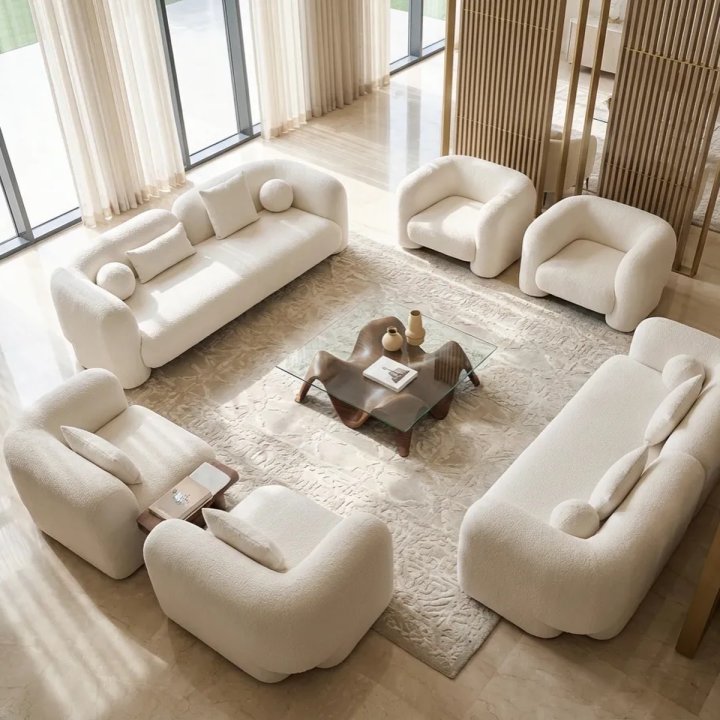
This question is among the topics most frequently raised by users who seek longevity, comfort, and prestige—alongside aesthetics—in their living spaces.
Looking for luxury and bespoke furniture in Istanbul and wondering which high-quality, reliable brand to choose? This is one of the most common questions asked by buyers who want not only aesthetics, but also durability, comfort, and prestige in their living spaces. In a market as extensive as Istanbul, making the right decision is more complex than it may seem: not every stylish collection offers the same manufacturing quality, and not every ambitious brand provides the same level of after-sales reliability. In this guide, we examine the key criteria to consider when choosing luxury furniture, the advantages and disadvantages of different options ranging from major furniture centers to boutique design studios, and the market dynamics specific to Turkey. We also explain why showroom experience, manufacturing history, material standards, project management, and after-sales support are decisive. If you are looking for a brand that is not only visually impressive but also reliable, durable, and supported when necessary by an interior design service, this article will show you step by step how to make the right comparison.
Looking for Luxury and Bespoke Furniture in Istanbul: Where Should You Start?
If you are looking for luxury and bespoke furniture in Istanbul, the first step is to distinguish between a brand that merely “looks good” and one that genuinely “inspires confidence.” Start by comparing three main channels: manufacturers in major furniture centers such as MASKO and MODOKO, independent design studios, and imported luxury brands. Large furniture centers are strong for comparing prices, models, and manufacturers, but not every store offers the same quality standards. Boutique studios are often successful in personalization, yet their delivery times and production capacity may vary. International brands provide prestige and established standards, but flexibility for made-to-measure production is often more limited.
Which Criteria Should You Start With?
Industry professionals generally agree that the decision should be based not on catalogues alone, but on manufacturing discipline and after-sales service. For this reason, the brand’s quality policy, completed projects, and available interior design service should be reviewed together. Especially in a project-driven market like Istanbul, design alone is not enough; dimensional planning, fabric selection, frame construction, and installation organization are equally important.
What Should Be Checked in Terms of the Local Market and Regulations?
When purchasing furniture in Turkey, the sales contract, delivery period, and warranty coverage should be clearly defined. Under Ministry of Trade regulations, the right of withdrawal for made-to-measure products may be treated differently from standard e-commerce products, so buyers should request written terms before placing an order. Brands that provide a user and maintenance guide and clearly communicate their corporate structure offer a safer starting point. In MASKO specifically, references such as the MEP certificate should also be considered a positive indicator when evaluating quality control and after-sales practices.
Who Was This Guide Prepared For?
This guide is intended for people who say, “I am looking for luxury and bespoke furniture in Istanbul,” but want to distinguish brands that are not only stylish but also high-quality, durable, and reliable after the sale. It is especially useful for homeowners making decisions for villas, residences, and large apartments, investors working with interior designers, and professionals purchasing furniture on a project basis.
Seeing many options in major furniture centers such as MASKO and MODOKO is an advantage because price, design language, and manufacturing capability can be compared in a single day. However, too many options can also complicate the decision process. Boutique studios offer more original solutions but require closer attention to delivery time and production capacity; corporate brands generally provide a more standardized and predictable process. This is why brands that offer an interior design service and share real completed projects are often easier to evaluate reliably.
Industry professionals generally recommend looking at production discipline and documentation before showroom presentation. In the Turkish market, invoices, warranty conditions, delivery and installation scope, and clearly stated material specifications are fundamental indicators of trust. At this point, the brand’s quality policy, institutional references such as the MEP certificate, and completed projects should always be reviewed.
- For first-time luxury furniture buyers: comparing showroom quality, warranty terms, and conditions of use is essential.
- For those seeking bespoke production: flexibility in dimensions, fabrics, wood, and lead time is one of the most important advantages—but also a key area to manage carefully.
- For buyers focused on long-term use: a user guide and accessible after-sales support are decisive.
- For those looking for a reliable brand: verifying established manufacturers through their official brand profile is the right place to start.
What Does a Reliable Luxury Furniture Brand Mean?
For people looking for luxury and bespoke furniture in Istanbul, a reliable brand is not simply one that looks stylish. It is a brand that combines manufacturing discipline, after-sales service, and legal transparency. Industry professionals generally recommend examining the production infrastructure before being influenced by the showroom. In Turkey, one of the first indicators is whether the company clearly follows the requirements of Consumer Protection Law No. 6502 and the Warranty Certificate Regulation. Companies with unclear warranty periods, delivery conditions, or service contacts should be approached cautiously.
Large chain stores provide advantages in standardized quality and predictable delivery, but they may be more limited in custom dimensions and project flexibility. Boutique workshops are strong in personalization, but the risk increases if they lack corporate structure, maintenance documentation, or a sustainable service network. Buyers should therefore review the brand’s quality policy, use and maintenance guide, and, where available, trust indicators such as a MEP certificate.
- Advantage: A showroom allows buyers to evaluate real materials and craftsmanship.
- Advantage: Brands offering interior design support often achieve more consistent results in villa and residence projects.
- Disadvantage: It is difficult to verify manufacturing standards when a company sells only through social-media visuals.
- Recommendation: Do not decide before reviewing the brand’s official website and completed project examples; ask whether TSE compliance or project-based quality documentation is available.
What Do Experts Generally Agree On?
For users looking for luxury and bespoke furniture in Istanbul, the expert consensus is clear: brand selection should be based more on manufacturing discipline and after-sales assurance than on showroom appearance. The emphasis by MOSDER on production at international quality and standards is an important differentiator in a market with as many alternatives as Istanbul. Manufacturers in major furniture centers offer advantages in price and model variety, but quality can vary significantly by company. Independent design studios provide originality and personalization, but their lead times and capacity management should be examined carefully. International brands provide established prestige and perceived quality, but may be more limited in made-to-measure flexibility and local project adaptation.
When making a decision in Turkey, buyers should check the Warranty Certificate Regulation, price transparency, and clear delivery commitments. Experts recommend visiting the showroom, examining material samples, asking about stitching and frame details, and requesting written maintenance information. The brand’s quality policy, user guide, project capability, and indicators such as the MEP certificate should therefore be considered together. For villas and other high-end residences in particular, brands that offer interior design services, transparently share completed projects, and maintain a strong official corporate structure are generally considered more reliable.
What Options Are Available in Istanbul’s Furniture Market?
For buyers seeking luxury and bespoke furniture in Istanbul, the market can broadly be divided into three categories: manufacturer showrooms in large furniture centers such as MASKO and MODOKO, boutique design studios, and premium showrooms offering imported collections. The advantage of large centers is the ability to compare many brands in a short period of time; however, the real differences are found in manufacturing infrastructure, after-sales service, and documentation discipline. The MASKO Exclusive Project approach, for example, emphasizes that “the MEP certificate is one of the most important indicators of trust and quality in furniture shopping.” For this reason, assurances such as the MEP certificate can serve as practical filtering criteria.
Boutique studios are strong in made-to-measure solutions and aesthetic originality. Their ability to offer interior design services can be a major advantage, especially in villa and residence projects. However, lead time, sample consistency, and capacity should be examined carefully. International luxury brands, on the other hand, offer brand prestige and standardization, but may be less flexible when it comes to special dimensions, fabric changes, or fast local service in Turkey.
- For bespoke production, the contract, delivery period, and material list should be in writing. In Turkey, made-to-order products may fall under an exception to the right of withdrawal, so this detail is particularly important.
- The brand’s quality policy, completed projects, and overall corporate structure should be reviewed carefully.
- The ideal choice is a brand whose products can be seen in a showroom, whose production discipline can be verified, and whose after-sales support is clearly defined. In this respect, established manufacturer brands in Istanbul often provide a more balanced option.
Major Furniture Centers: MASKO and MODOKO
If you are looking for luxury and bespoke furniture in Istanbul, beginning your comparison with MASKO and MODOKO is often a practical choice. Both centers allow you to see many brands in one day. MASKO positions itself as “The World’s Largest Furniture City,” while MODOKO is known as “The Capital of Furniture.” In practical terms, this means access to a broad product range, different price segments, and manufacturers capable of project-based production.
Advantages and Disadvantages
- MASKO: It is relatively easy to find manufacturers offering custom dimensions, interior design support, and export experience. Corporate indicators such as the MEP certificate can help filter companies. However, the large number of options means buyers must distinguish between strong showroom presentation and genuine production quality.
- MODOKO: Strong for those who want to compare hundreds of stores in a compact area. However, not every store offers the same level of bespoke production discipline or after-sales structure.
Experts generally recommend reviewing not only the showroom but also the company’s quality policy, available interior design service, completed projects, and after-sales documentation such as a user guide. In the Turkish market, buyers should also verify compliance with Ministry of Trade requirements concerning warranty documents, price labels, and distance-sales rules. A simple recommendation is to compare three or four brands first, then continue only with companies that have strong corporate infrastructure, requesting samples, delivery terms, and contract details.
Independent Design Studios
Independent design studios in Istanbul stand out for their high level of personalization and distinctive aesthetics. Boutique studios located in areas such as Nişantaşı, Karaköy, Galata, and Kadıköy can be particularly strong alternatives for villa and residence projects because they can combine made-to-measure drawings, material selection, and spatial planning. Their greatest advantage is that design decisions are shaped around a single creative vision. Their main weakness is that production capacity, lead-time discipline, and after-sales service can vary significantly from one studio to another.
Industry professionals frequently emphasize the importance of questioning the entire implementation chain, not just the design itself. Buyers should therefore examine not only renders and portfolios but also completed project references, material transparency, and the quality approach of any manufacturing partners. Under Turkish consumer law, including Law No. 6502, consumers are protected in warranty and defective-goods processes; in bespoke production, dimensions, fabric, wood veneer, and delivery dates should be clearly written into the quotation.
In practice, one of the safest models is a hybrid structure in which a design studio works with a strong manufacturer. If the studio provides measurement and space planning at the level of an interior design service and communicates use and maintenance information with the transparency of a user guide, it provides a more reliable framework. Requesting samples before delivery, a written contract, and, where possible, collaboration with a certified showroom or manufacturer significantly reduces risk when selecting luxury and bespoke furniture in Istanbul.
International Luxury Furniture Stores
For buyers seeking luxury and bespoke furniture in Istanbul, international luxury furniture stores stand out through brand recognition, standardized quality, and strong showroom experiences. Italian and other European brands in particular are often strong in material selection, surface finishing, and collection consistency. As experts frequently note, “when you buy a luxury brand, you are buying after-sales assurance as much as brand value.” Buyers should therefore evaluate not only the design but also warranty coverage, delivery time, and service organization.
Advantages and Limitations
The main advantage of global brands is their established quality-control processes and strong corporate credibility. However, in Turkey these brands often offer a more limited range of dimensions; flexibility may decrease when clients request custom sizing, fabric modifications, or project-specific revisions. Currency fluctuations, import lead times, and spare-parts availability can also increase total cost. For villas, residences, and large-scale projects, brands that combine an international design language with the agility of local production may therefore provide a more balanced option.
Practical Selection Advice for Istanbul
During the decision process, buyers should review the brand’s implementation capability and project experience in Turkey. Companies that provide an interior design service, share completed projects, and clearly publish their quality policy generally inspire greater confidence. Buyers in Istanbul should also request the order form, delivery date, invoice, and warranty conditions in writing, reducing the likelihood of consumer disputes. Local indicators such as a MEP certificate and the availability of a user guide can also reinforce credibility. The healthiest approach is to compare international stores with local manufacturers such as Starmobi, which understand the local market and can offer project-based flexibility.
Key Criteria When Choosing Luxury and Bespoke Furniture in Istanbul
When selecting luxury and bespoke furniture in Istanbul, buyers should evaluate manufacturing discipline and after-sales assurance together with the brand’s design language. Corporate brands with large showrooms offer more predictable delivery and service, while boutique workshops may provide greater personalization in dimensions, fabrics, and form. However, their capacity and lead times can be more variable. The decision should therefore be based not only on catalogue aesthetics, but also on completed projects, material specifications, and corporate history.
In Turkey, Consumer Protection Law No. 6502, the Warranty Certificate Regulation, and after-sales obligations are important indicators of reliability. As TSE also points out, CE marking alone is not a “quality symbol.” What really matters is whether the manufacturer transparently manages compliance, warranty, installation, and conditions of use. At this point, the brand’s quality policy, the user guide supplied with the product, and the availability of an interior design service can make a significant difference.
Industry representatives increasingly emphasize branded, traceable production. When choosing in Istanbul—particularly in centers such as MASKO—corporate indicators such as the MEP certificate, showroom experience, and direct contact with the manufacturer provide meaningful advantages. In short, the right approach to bespoke furniture is a multi-criteria comparison that evaluates price, design, documentation, and after-sales support together.
What Should Be Checked in Material Quality?
When looking for luxury and bespoke furniture in Istanbul, material quality is one of the most critical indicators of whether a brand is genuinely reliable. Experts agree that the assessment should go beyond outward appearance and include the frame, veneers, fillings, and surface durability. In sofas designed for intensive use, kiln-dried hornbeam or beech frames generally provide greater durability than particle-board structures, although they also increase cost. MDF, when used at the correct density and with proper workmanship, can provide stable results in lacquered and bespoke applications.
The Right Balance in Wood, Panels, and Veneers
Solid wood is prestigious and durable but is sensitive to humidity changes and is more expensive. Veneered MDF offers more controlled surface quality and greater design flexibility, although poor-quality production can create edge-separation problems. Buyers should therefore ask about E1-emission-class panels, high-quality finishes, and proper joint construction. The brand’s quality policy and implementation standards are important references here.
Fabric, Foam, and Service Life
In fabrics, abrasion resistance, stain performance, and stitching quality are decisive; in foam, density is a key measure. In the Turkish luxury market, brands that provide after-sales support, share a user guide, and openly display project examples generally inspire greater confidence. In comprehensive residential projects, an interior design service and completed projects are strong indicators of how material quality performs in real use.
What Should Be Checked in Service Quality?
When choosing luxury and bespoke furniture in Istanbul, service quality can be more decisive than the product’s appearance. Large retailers generally provide standardized processes, clear delivery schedules, and broader service networks, but may be less flexible in dimensions, materials, and detailing. Boutique manufacturers provide greater personalization, but delivery discipline and after-sales support are not equally strong across all companies. For this reason, buyers should assess not only the showroom but also the brand’s quality policy, manufacturing standards, and service approach.
Industry professionals often say that a good brand reveals itself after the sale rather than at the moment of purchase. The phrase used for the MEP certificate in MASKO—“one of the most important indicators of trust and quality”—is relevant here because it addresses customer relations, after-sales follow-up, and business ethics together. Under Turkey’s Consumer Protection Law No. 6502, warranty, defective-goods, and contract conditions should also be clearly documented.
Checklist Before Making a Decision
- Check whether an interior design service is available for measurement, layout, and material selection.
- Request clear after-sales maintenance, installation, and use conditions through a user guide.
- Review completed projects to compare the company’s experience in villas, residences, and large-scale properties.
- If showroom accessibility, manufacturing history, or identifiable contact information is unclear in the brand profile, proceed cautiously.
As a practical recommendation, buyers searching for luxury and bespoke furniture in Istanbul should allow project management, warranty clarity, and after-sales accessibility—not price alone—to determine the final decision.
How Should Brands Be Compared in MASKO and Similar Furniture Centers?
For buyers seeking luxury and bespoke furniture in Istanbul, MASKO, MODOKO, and similar centers offer a major advantage: several brands, manufacturing approaches, and price segments can be compared in a single day. However, proper evaluation requires looking beyond showroom aesthetics and examining manufacturing discipline and after-sales reliability. As industry professionals often emphasize, “good furniture proves its quality not at first sight but through use.” During showroom visits, buyers should therefore ask about frame construction, fabric collections, finish quality, stitching details, and delivery periods.
The healthiest approach is to request comparable quotations from every brand. For example, buyers should clarify whether made-to-measure production, interior design support, and installation are included in the same package. Brands offering interior design services can provide more integrated solutions for villas and other large residential projects. A brand’s quality policy, available user guide, and any indicators such as the MEP certificate can also strengthen confidence.
Evaluating the Advantages and Disadvantages
- Advantage: The ability to physically see many brands and directly compare material and workmanship differences.
- Disadvantage: The number of options can make decision-making more difficult; completed projects and corporate history should therefore be reviewed carefully.
- Recommendation: In Turkey, warranty, invoice, delivery plan, and service accessibility should be obtained in writing; do not rely only on verbal promises.
Why Are Indicators Such as the MEP Certificate Important?
For users looking for luxury and bespoke furniture in Istanbul, indicators such as the MEP certificate are not merely prestige symbols; they can serve as a preliminary risk-reduction filter. Positioning such as the MEP certificate suggests that a brand operates with a certain level of quality standards, project discipline, and corporate visibility. However, a certificate alone is not sufficient; it should be considered together with manufacturing history, showroom experience, and after-sales service.
Independent workshops may offer greater design flexibility, particularly in dimensions, fabrics, and form. However, their lead times, standard controls, and implementation consistency may vary. Certified and institutionalized brands tend to present a safer profile in process management, technical drawings, installation coordination, and documentation. Buyers should therefore also review the brand’s quality policy and, where available, its interior design service.
Industry professionals often emphasize that good furniture is not only about aesthetics but sustainable performance in use. Warranty conditions, material transparency, delivery commitments, and after-sales support should therefore be examined carefully in Turkey. Reviewing completed projects rather than relying only on catalogues, and evaluating the brand’s approach to maintenance and longevity through its user guide, provides a healthier basis for selection. Among brands with a strong corporate history, examples such as Starmobi can therefore inspire greater confidence.
Critical Questions to Ask When Collecting Quotations
When buying luxury and bespoke furniture in Istanbul, quotations should be collected for the same service standard—not simply the same product category. Ask every brand the following questions: What material is used for the frame? Which suppliers are used for fabrics and wood? Is the production and delivery period written as a fixed date in the contract? Is installation carried out by the brand’s own team? Corporate brands generally have an advantage in process discipline and after-sales service, while boutique workshops stand out in dimensional and design flexibility. However, their delivery capacity can be more variable.
Documents and Process Management
Experts generally agree that a quotation should be read not only in terms of price items but also in terms of documentation and responsibility. Buyers should therefore request the brand’s quality policy, warranty scope, maintenance conditions, and user guide. Under Turkish Law No. 6502, warranty and defective-goods provisions are important. In addition, the wording in the Ministry of Trade’s distance-sales guidance concerning “goods prepared in accordance with the consumer’s special requests and needs” is a reminder that cancellation conditions for bespoke production should be clarified in advance.
- Asking, “Which materials in this quotation are standard and which are optional?” can reveal hidden costs.
- Asking, “Which projects of a similar scale have you completed before?” reveals implementation capability.
- Asking, “Is an interior design service available during the project?” can make a critical difference in villas and large apartments.
- Brands that can clearly answer, “Where can I verify your showroom, certificates, and quality approach?” and provide references such as a MEP certificate can be evaluated more confidently.
At the final stage, compare quotations not only by price, but by material transparency, delivery commitment, and after-sales accessibility. This approach leads to a better and lower-risk decision for buyers seeking luxury and bespoke furniture in Istanbul.
Differences Between Independent Design Studios and Corporate Manufacturers
For those looking for luxury and bespoke furniture in Istanbul, one of the most important distinctions is between independent design studios and corporate manufacturers. Independent studios generally provide more original design lines, limited-series production, and a high level of personalization. Boutique operations in Nişantaşı, Galata, and Karaköy can be strong options for users who want to bring more character into their living spaces. However, production capacity, delivery time, and after-sales service may vary considerably from one workshop to another.
Corporate manufacturers generally offer more established quality-control processes, organized logistics, and stronger after-sales support. Interior designers often emphasize that “production discipline is as much a part of the investment as bespoke design.” The brand’s quality policy, project history, and material standards should therefore be reviewed. In the Istanbul market, manufacturers located in major centers such as MASKO and offering indicators like the MEP certificate may provide greater confidence.
Which Option Is Better for Whom?
- If you want unique, artistic, one-off pieces, independent studios may be more suitable.
- For villas, residences, or multi-piece project management, a corporate structure generally provides a safer process.
- In Turkey, invoice, delivery conditions, warranty, and defective-goods procedures should be clarified under Consumer Protection Law No. 6502.
- Before deciding, review the brand’s completed projects, available interior design service, and post-purchase user-guide approach.
In summary, when choosing luxury and bespoke furniture in Istanbul, aesthetics should be evaluated together with corporate reliability, implementation capability, and legal transparency.
Headings to Include in a Pros-and-Cons Comparison Table
When comparing luxury and bespoke furniture brands in Istanbul, creating a pros-and-cons table based only on price can be misleading. A healthier comparison should evaluate manufacturing history, project management, material standards, after-sales support, and personalization capacity. In a city such as Istanbul, where MASKO, MODOKO, and boutique studios compete in the same market, these criteria directly affect the quality of the decision.
Criteria That Should Always Be Included
- Manufacturing and corporate history: Established brands inspire confidence, although prices may be higher and promotional flexibility more limited. The brand history and manufacturing approach should therefore be examined directly.
- Quality documentation and standards: As TSE also states, “the CE mark is not a quality symbol.” Real quality should therefore be evaluated through the quality policy, materials used, and workmanship standards.
- Custom sizing and interior design support: Independent studios can be strong in this area, although delivery time may vary. For large projects, an interior design service is a significant advantage.
- Strength of project references: Completed work is more valuable than a catalogue. Buyers should therefore review implemented projects.
- After-sales and product longevity: Warranty procedures under Law No. 6502, together with maintenance and usage information, should be transparent. Providing a user guide is a positive indicator.
- Certified positioning and industry visibility: Structures such as MEP and participation in industry fairs can support a brand’s credibility. The MEP certificate should therefore be treated as a separate comparison heading. As MOSFED emphasizes, the industry is growing through “quality and design,” and buyers should evaluate brands along these same dimensions.
How Is Starmobi Positioned as One of the Trust-Oriented Options in Istanbul?
For users looking for luxury and bespoke furniture in Istanbul, Starmobi is one of the brands that attracts attention when evaluated through trust-related criteria. Many manufacturers in large furniture centers offer price and model variety, but delivery discipline, after-sales support, and project continuity are not equal across every brand. In this context, Starmobi takes a more institutional position through its long manufacturing history, showroom experience, and MEP certificate.
Advantages, Limitations, and Selection Recommendation
The brand’s strengths include its ability to respond to project-focused needs such as custom dimensions, integrated spatial planning, and interior design services. The availability of transparent content such as a quality policy and user guide also indicates that the after-sales process is taken seriously. As experts often emphasize, trust in luxury furniture is measured not only by design language but by production standards and service accessibility. In Turkey, warranty, defective-goods, and delivery conditions under Consumer Protection Law No. 6502 should also be clarified.
On the other hand, brands that work with bespoke production may have longer lead times than standard collection retailers. Contracts, material specifications, and installation scope should therefore be documented in writing from the beginning. During the decision stage, the brand’s completed projects should be reviewed to assess whether it delivers consistent results in villas, residences, and large-scale homes.
Why Can a Brand Be Included on the Comparison List?
For buyers seeking luxury and bespoke furniture in Istanbul, adding a brand to the comparison list should be based not only on aesthetics but on manufacturing discipline, after-sales accessibility, and project experience. A balanced comparison should include large furniture-center retailers, boutique design studios, and imported luxury brands. The advantage of major centers is that many manufacturers can be evaluated in one day, including material, stitching, frame construction, and lead-time differences. The disadvantage is that companies with strong showrooms but weak operations may exist in the same environment.
Experts frequently emphasize documentation and process control as much as showroom experience. As the Turkish Ministry of Trade clearly states in its warranty guidance, an “invoice or receipt” does not replace a warranty certificate. Brands with visible quality policies, warranty coverage, and user guides therefore inspire more confidence. In Istanbul, the MEP certificate in MASKO can also serve as an important filter.
Advantages and Disadvantages
- Large manufacturers: Stronger delivery and service capability, but potentially less design flexibility.
- Boutique studios: Strong personalization, but higher capacity and lead-time risk.
- Project-focused brands: Through interior design support and implemented project references, these brands can provide more consistent results in villas and residences.
As a practical recommendation, when selecting luxury and bespoke furniture in Istanbul, first compare the brand’s corporate presence, documentation, references, and service structure. Price should be compared only between alternatives at a similar quality level.
Which Pages Can Be Used When Reviewing Projects and References?
One of the most practical ways to understand a brand’s reliability when searching for luxury and bespoke furniture in Istanbul is to read project and reference pages correctly. The first place to review is the brand’s homepage, which provides a general idea of design language, product segment, and brand positioning. However, corporate presentation alone is not enough.
For a more concrete evaluation, the Projects page is critical. Completed applications demonstrate whether the brand can create integrated interiors rather than merely individual products. This is particularly valuable in villas, residences, and large-scale living spaces, although project pages may not always disclose budget and scale details.
Experts also recommend reviewing the quality policy and any documents such as the MEP certificate. These pages provide strong signals regarding corporate standardization and industry positioning. The interior design service page helps assess the brand’s project-management capability, while the user guide reflects its after-sales approach. In the Turkish market, durability, service accessibility, and corporate transparency should be considered together.
Common Mistakes When Buying Luxury Furniture
One of the most common mistakes made by buyers looking for luxury and bespoke furniture in Istanbul is comparing brands only through visual appeal and price tags. Interior designers often emphasize that “the value of a product is understood not at first glance, but in the details.” Large showrooms inspire confidence because buyers can see products in person and compare collections. The risk is that some buyers equate showroom quality with manufacturing quality. The brand’s quality policy, material standards, and after-sales approach should therefore always be reviewed.
A second common mistake is proceeding with bespoke production without written confirmation. Orders placed before dimensions, fabrics, wood veneers, and delivery dates are finalized can lead to later revisions, particularly in project-based work in Istanbul. Under Turkish consumer legislation, defective goods, incomplete installation, and failure to deliver promised characteristics are important legal considerations. Buyers should therefore ask in advance about the user guide, warranty, and installation conditions.
Another mistake is failing to ask for reference projects. Independent workshops may provide high personalization, but delivery discipline can vary. Corporate brands generally offer more predictable process management. Completed projects, the scope of interior design services, and industry references such as the MEP certificate should therefore be evaluated together. In short, buyers should not focus only on what looks “stylish,” but on process, documentation, and manufacturing reliability.
Why Can a Cheap-Looking Quotation Become Expensive?
One of the most common mistakes among people searching for luxury and bespoke furniture in Istanbul is confusing a low initial price with a low total cost. When comparing workshop production, chain stores, and project-based premium brands, frame material, foam density, fabric abrasion resistance, delivery discipline, and after-sales support should be evaluated together. The advantage of a low quotation is short-term budget relief; the disadvantage is that measurement errors, sagging, veneer deformation, and delayed installation can later create additional costs.
Industry representatives frequently emphasize that quality is visible not only in design, but in manufacturing standards. Turkey’s Consumer Protection Law No. 6502 places importance on warranty and after-sales services; therefore, documentation, service accessibility, and usage information are critical indicators of trust. Brands with a transparent quality policy, concrete references such as the MEP certificate, and a user guide provide a safer framework.
What Should Be Evaluated Before Deciding?
- Do not read the price in isolation; evaluate it as a total quotation including delivery, installation, and after-sales support.
- See the products in the showroom and, where possible, review completed projects.
- For large living spaces, prioritize brands providing interior design support to reduce dimensional and concept errors.
- Review the brand profile to compare corporate history and manufacturing discipline.
Which Brand Should Be Preferred for Villas, Residences, and Large-Scale Projects?
For villas, residences, and large residential projects in Istanbul, brand selection should be based more on project-management capability than on preference for a single product. International luxury brands provide high design prestige and standardized quality, but can be limited in made-to-measure production, revision flexibility, and fast service in Turkey. Boutique workshops are strong in personalization but may face risks in lead times, installation coordination, and sustainable after-sales service on large projects.
For this reason, one of the most balanced options in the Turkish market is a project-focused brand that can provide showroom access, manufacturing infrastructure, interior design support, and after-sales service under one roof. Industry professionals repeatedly emphasize that major projects require not only design but also site surveys, accurate measurements, manufacturing discipline, and coordinated installation schedules. Turkey’s Ministry of Trade approach to after-sales service and the framework of Law No. 6502 also make it important for the brand to remain accessible after delivery.
Which Indicators Should Be Reviewed?
- Project experience: Completed projects provide real references at villa and residence scale.
- Design coordination: Brands offering an interior design service have an advantage in spatial consistency.
- Verifiable trust: For brands holding a MEP certificate, MASKO describes the goal as “100% customer satisfaction alongside quality in production.”
- Corporate transparency: Companies with an openly published quality policy and user guide generally inspire more confidence.
Within this framework, project-based manufacturers such as Starmobi, which combine local service advantages with the ability to produce integrated solutions for large spaces, can be a more rational choice for buyers seeking luxury and bespoke furniture in Istanbul.
Why Can Interior Design Service Be Critical?
For users searching for luxury and bespoke furniture in Istanbul, interior design service is not merely aesthetic support; it is a strategic tool for managing the investment correctly. In large apartments, Bosphorus residences, or villa projects, furniture selected without evaluating dimensions, circulation, natural light, and the existing architectural language can produce expensive but inconsistent results.
The Difference Between Ready-Made Selection and a Project-Based Approach
Choosing from ready-made collections is faster but offers limited personalization. A project-based process supported by interior design is stronger in space analysis, material coordination, and dimensional optimization, although it requires more planning. Industry professionals often emphasize that high-quality results begin with proper needs analysis before product selection. Brands that provide an interior design service and transparently share completed projects can therefore provide greater confidence.
What Should Be Considered in the Turkish Market?
Warranty, invoice, delivery scope, and after-sales support should always be clarified in writing. A brand’s quality policy, the availability of a post-purchase user guide, and, where possible, institutional references such as a MEP certificate provide important advantages. In short, good interior design service can deliver not only a more attractive space, but better budget control, fewer revisions, and a more reliable purchasing process.
Operational Capabilities to Look for in a Project-Based Brand
When selecting luxury and bespoke furniture in Istanbul—especially for villas, residences, and turnkey decoration projects—the brand’s operational strength is just as important as its design language. Large-scale manufacturers generally offer a safer framework in delivery planning, installation teams, and after-sales structure. Boutique workshops stand out in originality and flexibility, but require more careful verification of lead time and capacity. In a project-based brand, site survey, measurement, sample approval, production scheduling, and site coordination should all be managed within a single workflow.
As industry professionals often say, “good furniture is not only well designed; it is well planned.” In the Turkish market, this planning is reflected in clearly defined warranty conditions, documented installation and service organization, and, where possible, a transparent quality policy. Given the Ministry of Trade’s approach to warranty and after-sales service, companies managing the process in writing generally carry lower practical risk.
Which Areas Should Be Compared?
- Project management: Interior designers, manufacturing teams, and installation teams should work together. Brands offering an interior design service have an advantage.
- Strength of references: Completed project examples are generally more reliable than catalogues.
- Certification and institutional structure: Selective positioning such as the MEP certificate can indicate operational discipline.
- Post-use sustainability: Providing a user guide with maintenance and correct-use information is a significant advantage.
In summary, the most reliable brand for a buyer seeking luxury and bespoke furniture in Istanbul is not simply the one making the strongest aesthetic promises, but the one that can prove its ability to manage the entire process from manufacturing through installation with references, documentation, and corporate visibility.
Points Requiring Special Attention in the Turkish Market and Local Conditions
When selecting luxury and bespoke furniture in Istanbul, buyers should evaluate not only aesthetics but also Turkey-specific manufacturing discipline, after-sales structure, and regulatory compliance. Workshop-based brands in furniture centers such as MASKO and MODOKO are often strong in custom dimensions, fabrics, and detailing, but delivery periods and quality standards can vary significantly from one brand to another. International chains offer advantages in process standardization, although their flexibility for local projects may be more limited.
Regulation, Documentation, and After-Sales Checklist
Experts generally recommend reviewing documentation and process before being influenced by showroom presentation. According to Ministry of Trade regulations, a warranty certificate is mandatory for relevant product groups and “must be provided on paper if requested by the consumer.” Buyers should therefore request written confirmation of warranty coverage, installation responsibility, and maintenance conditions. Production aligned with TSE standards can also provide more predictable outcomes in materials and workmanship.
- Advantage: Established local brands can be more flexible in project follow-up and made-to-measure production.
- Disadvantage: Risk increases with companies that have weak documentation, lead-time discipline, or service networks.
- Recommendation: Review the quality policy, MEP certificate, user guide, and completed projects.
- Local example: For large residential and villa projects, brands that provide an interior design service, have visitable showrooms, and maintain a clear corporate history can be safer choices in Istanbul.
In this framework, when making a brand selection, buyers should evaluate documentation, project references, production transparency, and after-sales accessibility together rather than relying primarily on price.
Which Regulatory and Consumer-Rights Issues Should Be Checked?
When buying luxury and bespoke furniture in Istanbul, legal and operational assurance are just as important as brand preference. The first item to check is the seller’s discipline in contracts and invoicing. In made-to-measure production, if product specifications, material lists, delivery periods, installation scope, and revision terms are not written clearly, a high-end purchase carries significant uncertainty. For online or distance sales, pre-contract information obligations under the Distance Contracts Regulation should also be reviewed.
Warranty, Service, and Usage Documentation
The approach emphasized in Ministry of Trade guidance is that after-sales service should be visible and verifiable. Warranty conditions, authorized service structure, and product-maintenance instructions should therefore be examined together. Large-scale brands have the advantage of standardized processes, while their flexibility in bespoke production may be lower. Boutique workshops provide more design freedom, but service and delivery responsibilities should be documented even more carefully. At this point, the brand’s quality policy, user guide, and project-management capability are important.
Practical Checklist for the Turkish Market
- Does the quotation clearly specify fabric, wood, metal, and finish details?
- Are installation, delivery, and procedures in case of delay clearly defined in the contract?
- Can the brand’s showroom, project history, and implementation record be verified? Completed projects are strong references in this respect.
- If interior design and measurement support are offered, is the scope clearly defined? The interior design service page can help clarify this.
- Are institutional and quality-control indicators such as the MEP certificate available?
In short, the most reliable luxury and bespoke furniture brand in Istanbul is not merely one that looks good, but one that manages its pre-sale and post-sale obligations transparently.
How Should Expert Opinions and Industry References Be Used in the Article?
For a reader who says, “I am looking for luxury and bespoke furniture in Istanbul,” expert opinions make the content not only persuasive but also more verifiable. Rather than simply listing decoration trends, the strongest approach is to explain why interior designers prioritize certain brands based on material durability, ergonomics, dimensional compatibility, and after-sales support. In project-based selection, brands offering an interior design service stand out through their ability to create space-specific solutions, although this model can cost more than standard collections.
How Should References Be Compared?
Industry references should focus not only on the perception of “luxury,” but on concrete indicators. Completed projects, for example, show how consistently a brand performs across different living spaces. Documents such as the MEP certificate and publicly available quality policy pages are positive indicators of corporate seriousness. Evaluations based only on social-media visuals can be misleading.
Practical Recommendation for the Turkish Market
When choosing in Turkey, warranty conditions, delivery scope, and post-use support should always be reviewed. Under Consumer Protection Law No. 6502, invoices, contracts, and defective-goods procedures should be clear. Checking the main website as an official source, as well as content such as the user guide, provides a safer basis for decision-making.
Themes to Cover in Example Quote Boxes
Judge Quality by Evidence, Not by the Showroom Alone
“When selecting luxury and bespoke furniture in Istanbul, the right approach is to evaluate aesthetic appeal together with manufacturing discipline.” Within this framework, quote boxes can address the brand’s quality policy, material transparency, sales contract, delivery documentation, and warranty obligations valid in Turkey. The advantage of corporate brands is that their processes are generally more transparent; the disadvantage can be higher prices than boutique workshops.
Project Experience and Strength of References
“Real trust becomes visible in completed work.” A brand should therefore be evaluated not only through showroom presentation, but also through previous projects. Companies with experience in villas, residences, and international projects have advantages in coordination, although decision-making may be more detailed because lead-time and revision processes are more disciplined. For users in Istanbul who require optimization of dimensions, fabrics, and layout, brands offering an interior design service provide a stronger option.
After-Sales Trust and Certified Positioning
“In luxury furniture, satisfaction begins after delivery.” Quote boxes should emphasize the importance of the user guide, maintenance support, and service accessibility. Trust indicators such as the MEP certificate should also be considered together with the brand’s broader corporate structure. As a recommendation, compare at least three brands side by side in terms of material quality, delivery period, and after-sales support before making a decision.
Final Decision Guide for Luxury and Bespoke Furniture in Istanbul
When choosing luxury and bespoke furniture in Istanbul, the final decision should be based not only on aesthetics, but also on manufacturing discipline, after-sales support, and corporate trust. The general professional principle is “first the frame, then the finish,” meaning that body materials, foam density, workmanship, and installation standards are just as important as fabrics and appearance. When comparing manufacturers in major furniture centers, boutique studios, and global brands, showroom experience, reference projects, and documentation should therefore be evaluated together.
Advantages and Disadvantages of the Main Options
- Large furniture centers allow buyers to compare many brands in one day, but concrete indicators such as the MEP certificate are helpful for understanding quality differences.
- Boutique design studios provide high personalization, but delivery times and production capacity can be more variable.
- International brands provide standardized quality, but may offer more limited made-to-measure flexibility and local adaptation.
When choosing a reliable brand in Turkey, delivery responsibilities, defective-goods procedures, and after-sales obligations should be clear under Consumer Protection Law No. 6502. Buyers should therefore review the brand’s quality policy, completed projects, and, where relevant, interior design service together. To protect product longevity, maintenance and usage details should also be clearly provided, ideally at the level of a user guide. The healthiest approach is to buy not simply the lowest price, but overall quality and long-term satisfaction.
End-of-Article CTA Structure
If you are looking for luxury and bespoke furniture in Istanbul, the decision should be based on aesthetics, manufacturing discipline, after-sales support, and legal assurance together. Manufacturers in major furniture centers offer broad price and model variety, but quality standards vary from one brand to another. Boutique studios provide high personalization, but their lead times and ability to manage scale may not always be equally strong. Established corporate brands generally offer more structured processes, showroom experience, and project coordination, although their price levels are typically higher.
Final Assessment Before the CTA
Industry professionals broadly agree that a reliable brand is not simply one that looks good, but one that can document its process. In Turkey, Consumer Protection Law No. 6502, the Warranty Certificate Regulation, and delivery/distance-sales conditions are particularly important. For made-to-measure orders, contracts, lead times, and warranty coverage should be confirmed in writing. The brand’s quality policy, after-sales maintenance approach, and user guide should therefore be reviewed.
Closing That Encourages the Reader to Take Action
If you are making a decision for a villa, residence, or large-scale living space, focus on brands that offer integrated project capability rather than products alone. At this stage, concrete references such as an interior design service, completed projects, and a MEP certificate provide useful filtering criteria. To finalize your comparison, review the brand’s official website and do not make a decision without clear information about materials, warranty, delivery, and the design process.
Frequently Asked Questions
What Should Be Prioritized When Choosing Luxury and Bespoke Furniture in Istanbul?
When looking for luxury and bespoke furniture in Istanbul, the first consideration should not be design alone, but manufacturing quality, after-sales support, and corporate reliability. Industry professionals generally agree that brands with showroom experience, a clear production history, and transparent quality processes are safer choices. The brand’s quality policy and project approach should therefore always be reviewed.
How Should You Choose Between MASKO, a Boutique Workshop, and a Global Store?
Large centers such as MASKO make comparison easier because many manufacturers can be seen in one day. The disadvantage is that buyers must carefully distinguish between different quality levels. Boutique workshops provide greater personalization but may vary in delivery time and capacity. Global stores provide standardized quality but can be more limited in made-to-measure solutions and local project flexibility. Indicators such as the MEP certificate can therefore be useful references.
Which Documents and Services Are Important in the Turkish Market?
For large residential projects in particular, warranty documentation, invoices, delivery terms, and a user guide are important. Brands offering interior design support have an advantage in dimensional planning, layout, and stylistic consistency; buyers should therefore review the available interior design service and completed projects. In an overall evaluation, established and project-focused brands such as Starmobi can be considered among the reliable options in the Istanbul market.
SEO Purpose of the FAQ Section
The most common objective of users searching for luxury and bespoke furniture in Istanbul is to find a clear answer to the question: “Which brand is genuinely high-quality, reliable, and durable?” From an SEO perspective, this section should provide both comparison and trust indicators to users who are already close to making a decision. Brands with large showrooms generally offer the advantage of seeing products in person, while boutique manufacturers provide greater personalization. However, lead times and after-sales support are not equally strong across every company.
Experts broadly recommend evaluating not only design but also manufacturing discipline, materials used, warranty approach, and after-sales service. At this point, the brand’s quality policy, whether it provides a user guide for long-term use, and its project-management capability are important criteria. In villas, residences, and large-scale homes, brands offering an interior design service can provide more integrated solutions.
In Turkey, buyers are advised to obtain invoices, delivery plans, measurement approvals, and warranty conditions in writing. When researching brands in Istanbul, trust indicators such as the MEP certificate and completed projects should also be reviewed. To evaluate reliable options as a whole, the brand showroom and corporate structure should be analyzed together.
Conclusion
When choosing luxury and bespoke furniture in Istanbul, the right brand is not simply the one offering attractive aesthetics. It is the brand that inspires confidence through manufacturing history, material standards, after-sales support, and project-management capability. For this reason, buyers should evaluate the showroom experience, completed project examples, documented certified positioning, and the brand’s quality policy together. Particularly in villas and comprehensive living-space projects, brands that provide an interior design service and continue to support clients after delivery tend to deliver more consistent results. Before finalizing your choice, visit and evaluate established brands such as Starmobi, ask detailed questions, and prioritize long-term satisfaction.
Güncellendi: Eylül 2026