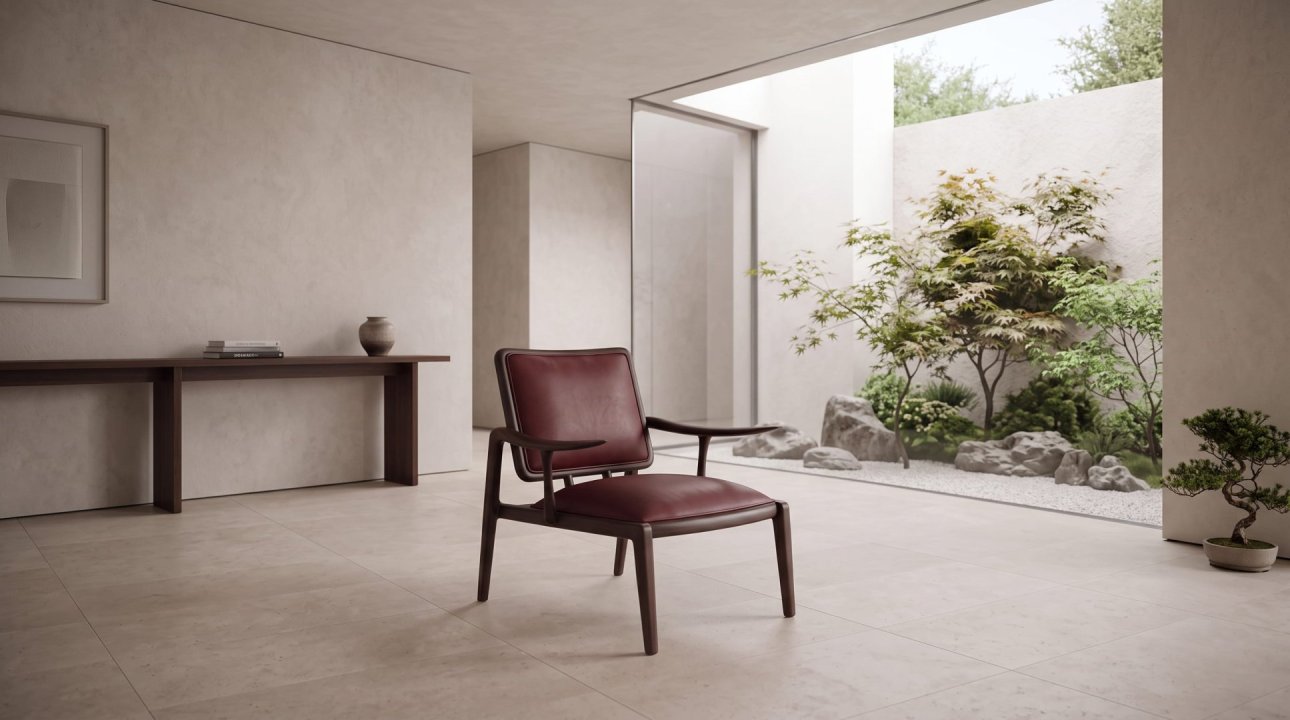
How to choose an armchair: wingback, swivel and low lounge shapes, seat height, fabric or leather, matching the sofa set and placement.
The armchair is one of the most used and least planned pieces in a living room. It is often added after the sofa set has been chosen, yet this single seat shapes both the seating plan and the character of the room. This guide starts from the layout of the room: first the job the armchair will do, then shape, size, upholstery and placement.
Decide what the armchair is for
- Completing the seating group: it is part of the conversation area, so it should be easy to get in and out of and close to the sofa in seat height.
- A reading and resting corner: it will be used for long periods, so back and head support, arm height and seat depth matter most.
- An accent piece: shape, colour and texture can be bolder, but an armchair that is not comfortable soon goes unused.
Armchair shapes by room layout
| Shape | Best use | Suitable layout | What to check |
|---|---|---|---|
| Wingback | Reading and resting | A room with a free corner, classic or transitional style | It has a large visual volume; leave space around it |
| Armchair with arms | Conversation and daily use | Almost any room, including narrow ones | Measure the full width including the arms |
| Swivel | Turning between views | Open-plan living room joined to the kitchen | Keep the turning area clear |
| Low lounge | Long rest | Large, contemporary living room | Try the seat depth and how easy it is to stand up |
Size and seat height
Comfort starts when the dimensions fit the person. Your feet should rest flat on the floor and the front edge of the seat should not press behind the knees. Shorter users are more comfortable in shallower seats, taller users in deeper ones. An upright, high back suits reading; a more reclined back suits resting. Compare the seat height with that of the sofa, mark the footprint of the chair on the floor with tape before you shop, and note the width of doors, corridors and the lift.
Fabric or leather?
Because it is a single piece, an armchair lets you be bolder with upholstery than a sofa set does. Velvet is soft and changes tone with the light, and its pile can show seating marks. Bouclé suits rounded shapes, but its loops can catch on pet claws. Flat weaves and linen-look fabrics are calm and balanced. Leather gains character over time and should be kept away from direct sunlight and heat sources. See our guide to velvet, bouclé and chenille fabrics and our comparison of leather or fabric sofas.
Matching the sofa set
An armchair does not have to match the sofa set. The same upholstery gives unity; a complementary tone or a different texture makes the armchair a focal point. A practical rule is to keep the contrast to one element: if the shape differs, keep the colour close, and if the colour differs, keep the shape simple.
Designing the armchair together with the set makes this easier. STARMOBİ, a manufacturer in production since 1981, makes its armchairs and sofa sets to measure and to taste, with Italian fabric and leather options that can be applied to different pieces of the same set.
Placing an armchair in the living room
- In a conversation group, set the armchair at a slight angle to the sofa.
- For a reading corner, choose a spot by a window with daylight and add an adjustable light.
- If two armchairs stand side by side, place a side table between them; see how to choose a table for between armchairs.
- Keep walkways clear; the chair should not block a door or a walking line.
For the plan of the whole room, see our guide to furniture arrangement in the living room.
Try it before you decide
Back support, arm height and seat depth can only be judged by sitting. Sit for a few minutes in the showroom the way you would at home, and bring your measurements and a photo of your room. The STARMOBİ showroom is at Masko, Block 19A No:12–14, open seven days a week from 09:00 to 19:00.
Frequently asked questions
What should I look at first when choosing an armchair?
Start with the job the armchair will do in the room: completing the seating group, creating a reading corner, or acting as an accent piece. Shape, size and upholstery follow from that role.
Which armchair shape suits a small living room?
Compact armchairs with slim arms and open legs look lighter in a small room. Measure the full width including the arms and check the walkways before deciding.
Does an armchair have to match the sofa set fabric?
No. The same fabric gives unity, while a complementary tone or a different texture turns the armchair into a focal point. Keeping the contrast to one element keeps the room balanced.
Is fabric or leather better for an armchair?
It depends on how often the chair is used, how much care you expect to give it, and how it feels to the touch. Look at the sample in the corner where the chair will stand, in daylight and in evening light.
How many armchairs should a living room have?
That depends on the size of the room and the seating plan. One armchair works as a reading corner or accent piece; two armchairs with a side table between them create a balanced conversation group opposite the sofa.