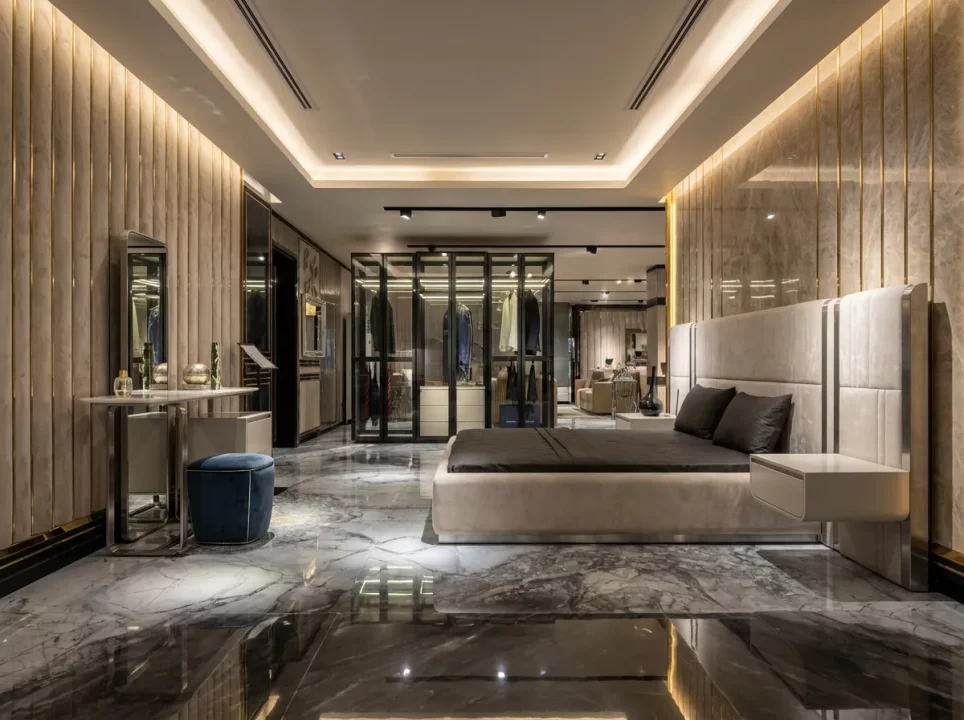
A Comprehensive Guide for the Turkish Market: How to Find a Certified Furniture Manufacturer with Years of Experience?
How can you find a long-established, certified furniture manufacturer? This is a critical starting point, especially for consumers in the Turkish market who are looking for high-quality, reliable, and durable furniture. An impressive showroom, attractive social-media visuals, or appealing promotions alone do not prove that a brand has a genuinely strong manufacturing infrastructure. What really matters is the brand’s production history, documents and certifications, approach to after-sales service, material transparency, and reputation in the industry. In this guide, we explain how to distinguish an established manufacturer from brands that rely mainly on superficial marketing language, and which areas should be examined—from showroom visits and official-record checks to quality documentation and project experience.
We will also evaluate differentiating factors that buyers may encounter in Turkey, particularly in major commercial centers such as Istanbul, including certification structures, corporate quality systems, and interior-design support. By reviewing indicators such as a brand’s corporate history, quality policy, and, where applicable, MEP certificate, we provide a practical framework for making a more informed decision.
How Do You Find a Long-Established, Certified Furniture Manufacturer?
The answer lies not in a single showroom visit, but in evaluating the company’s history, documentation, manufacturing transparency, and after-sales service together. In the Turkish market, the age of a brand alone is not sufficient; the company’s corporate history, quality approach, and genuine manufacturing capability should be reviewed as a whole.
Which Indicators Are More Reliable?
The first option is to focus primarily on price-driven manufacturers. The advantage is easier budget control; the disadvantage is uncertainty regarding material standards and long-term durability. The second option is to choose established manufacturers that provide certifications and references. Their initial cost may be higher, but they usually offer a safer framework in terms of warranty, dimensional accuracy, and continuity of service. As industry professionals often emphasize: “A quality claim without documentation remains a marketing statement until it is verified.”
What Should You Look for in Turkey?
Buyers should verify compliance regarding the materials used in furniture, TSE requirements, warranty documentation, invoices, delivery terms, and distance-sales provisions. The company’s quality policy and project-management approach should also be reviewed. For bespoke production or large-volume purchases, access to an interior design service is a significant advantage because it reduces measurement, layout, and implementation errors. In highly competitive markets such as Istanbul, verifiable indicators such as a MEP certificate and references shared through the brand’s official channels are among the healthiest places to begin.
Who Is This Guide For?
This guide is prepared for different buyer profiles searching for a long-established, certified furniture manufacturer in the Turkish market. It provides a practical evaluation framework for homeowners making a high-budget furniture investment for the first time, managers planning bulk purchases for hotels, residences, and offices, interior designers looking for reliable suppliers, and corporate purchasing teams requiring made-to-measure production. If your priority is not visual appeal alone but also manufacturing discipline, documentation, and after-sales assurance, this content is directly relevant to you.
For residential buyers, the main benefit is learning to distinguish a compelling brand story from genuine manufacturing strength; the drawback is that this research takes time. For project professionals, comparing certifications, references, and implementation capacity becomes even more important. Manufacturers offering an interior design service can provide additional value in measurements, layout planning, and material coordination. In Turkey, TSE compliance, warranty conditions, invoice transparency, and a corporate quality approach should always be reviewed. The company’s corporate history, quality policy, and third-party indicators such as a MEP certificate, where available, should therefore be evaluated together. In short, this guide is designed for informed buyers who want to find the right balance between price and reliability.
Short Answer: How Can You Tell Whether a Manufacturer Is Reliable?
A reliable furniture manufacturer is not simply a company that offers attractive products. It is a company whose manufacturing history can be verified, that openly shares its quality documentation, and that accepts responsibility during the after-sales process. To make a quick initial assessment in Turkey, look at three points: how long the company has actually been manufacturing, which quality approach it follows, and whether its claims are supported by independent or institutional references. Pages such as the corporate history and quality policy should be among the first areas checked.
When comparing alternatives, brands that appear strong only on social media offer the advantages of quick access and frequent promotions, but they often provide limited evidence of actual manufacturing standards. Manufacturers that share showroom information, project references, and certification details are more transparent, although they may operate at a higher price level. Experts frequently emphasize that “a quality claim without documentation provides incomplete assurance to the buyer.” In Turkey, compliance with TSE standards, clear warranty conditions, and invoice-and-contract procedures consistent with consumer legislation are important indicators.
Especially in competitive markets such as Istanbul, institutional verification such as a MEP certificate can help differentiate one manufacturer from another. For bespoke or project-based purchases, the availability of interior design support can also indicate that the company is strong not only in sales but in implementation discipline. In short, a reliable manufacturer has strength in all three areas: history, documentation, and service structure.
Why Choose a Furniture Manufacturer with Many Years of Experience?
Choosing a long-established, certified furniture manufacturer is not only a matter of brand prestige; it is also a safer form of risk management. New-generation boutique brands may offer original design, fast communication, and pricing flexibility, but they do not always provide the same confidence in production consistency, after-sales support, and replacement-part continuity. Established manufacturers, by contrast, often stand out through quality-control systems, supplier networks, and service structures developed over time. The common industry observation that “the option that looks cheaper can become more expensive in the long run” is particularly relevant in furniture purchasing.
In the Turkish market, buyers should look beyond showroom products and review the company’s corporate background, quality documents, and project references. Brands that clearly publish their manufacturing history and manufacturers that transparently present their quality policy provide a stronger basis for trust. Structures such as the MEP certificate found in major furniture centers can also indicate that a company has been assessed against specific criteria.
Advantages and Points to Consider
- Advantage: Established manufacturers are generally more systematic in warranty, maintenance, spare parts, and delivery planning.
- Advantage: It is usually easier in practice to pursue rights under Consumer Protection Law No. 6502.
- Disadvantage: Prices may be higher than those of short-lived, promotion-driven brands.
- Recommendation: Before making a decision, ask whether the company provides bespoke project services, dimensional planning, and interior design support; this is a significant advantage in made-to-measure production in Turkey.
Choosing an Established Brand: Advantages and Disadvantages
Selecting a certified manufacturer that has operated for many years in Turkey often reduces risk, but buyers should not rely on the perception of an “old brand” alone. The strongest advantages of established brands are mature manufacturing discipline, a visible showroom presence, clearer warranty procedures, and a quality approach that can be documented. Companies that openly publish their quality policy and transparently explain their corporate history on an About Us page generally inspire more confidence.
Another important advantage is third-party verification. Indicators such as a MEP certificate show that a brand is supported not only by its own claims but also by external assessment. TSE standards for furniture and wood-based panels, together with the Ministry of Trade’s warranty-certificate framework, are also key references for consumers in Turkey. As industry representatives often emphasize, “quality that meets standards” and “brand visibility” are not the same thing.
On the downside, established brands may have higher prices, less design flexibility, or longer lead times. The best approach is therefore to assess certification, material class, after-sales support, and project capability together. In projects requiring made-to-measure production and professional planning, manufacturers offering an interior design service generally deliver more controlled results. In short, choosing an established brand in Turkey is advantageous, but no decision should be made before documentation, references, and service scope are verified.
How Should Manufacturing History Be Researched?
When looking for a long-established, certified furniture manufacturer, the first area to investigate is the brand’s manufacturing history. Looking only at the founding year stated on the website is not enough; official records, physical presence, and industry footprint should be evaluated together. A practical starting point is the brand’s About Us page, followed by trade-registry information and any corporate statements about its manufacturing facilities.
Which Sources Are More Reliable?
- Official records: Trade-registry records, chamber membership, and tax history are among the strongest verification tools. Their advantage is objective data; their limitation is that they do not prove manufacturing quality by themselves.
- Showroom and factory history: Operating in the same area for many years can inspire confidence. The advantage is the opportunity for tangible observation; the limitation is that not every long-established store maintains the same production standard.
- Certificates and quality documents: Third-party evaluations such as a MEP certificate should be reviewed together with statements published in the company’s quality policy.
A common professional rule in the Turkish market is: “The founding year is a claim; verified continuity in manufacturing is evidence.” Trade-fair participation, reference projects, and corporate services such as an interior design service should therefore also be researched. Manufacturers that export or maintain a long-term presence in major furniture centers generally have more mature supplier and quality-control systems. The best method is to cross-check the brand’s corporate presence through official documents, on-site observation, and certification.
Which Sources Should Be Used to Verify the Founding Year?
When searching for a long-established, certified furniture manufacturer, the founding year should be verified through more than one source. The most practical starting point is the company’s official About Us page, which provides fast and direct information but should not be treated as sufficient evidence on its own. Stronger verification can be obtained from the Turkish Trade Registry Gazette, the relevant chamber of commerce, and MERSİS records. These sources provide official dating, although corporate-name changes, transfers, and restructurings may require careful interpretation.
Furniture-industry professionals generally recommend interpreting the founding year together with the company’s manufacturing history. The date a company was legally registered and the length of its actual production experience may not be the same. Buyers should therefore also review showroom history, project references, and the company’s quality approach. Documents such as a published quality policy and, where available, a MEP certificate provide a second layer of evidence supporting corporate continuity. If the brand claims to offer bespoke production and project management, pages describing an interior design service can also reveal operational maturity. The healthiest method is to compare official records with the company’s own narrative and then confirm the brand’s presence physically through a showroom or dealer.
Where a Long Track Record Truly Provides an Advantage
A manufacturer that has been operating for many years is not automatically the best option, but experience provides a clear advantage in several areas. Experienced companies often perform better in made-to-measure manufacturing, delivery planning, service continuity, and material standardization. In Turkey, the difference between brands that open a showroom in a major city and disappear quickly and companies with an established manufacturing culture often becomes most visible after the sale.
Strengths and Weaknesses of Experience
The greatest advantage of established manufacturers is supplier-chain and craftsmanship discipline. As industry professionals often note, “consistent quality can only be achieved through repeatable and auditable processes.” Companies that openly publish a quality policy and transparently communicate their corporate background through an About Us page generally inspire greater confidence. Third-party indicators such as a MEP certificate are also reminders that buyers should not rely only on marketing language.
However, being an older company can sometimes mean slower design evolution, weaker digital communication, or less pricing flexibility. The recommended approach is therefore to choose manufacturers that are established but still current. Companies that address interior needs as a complete project rather than as isolated products and can provide an interior design service combine a long history with contemporary service capability. For the healthiest decision, evaluate production age, certifications, warranties, and references together rather than relying only on brand recognition.
Which Documents and Indicators Matter When Choosing a Certified Furniture Manufacturer?
When looking for a certified furniture manufacturer, one document is not enough. Official certifications and operational evidence from the field should be assessed together. In the Turkish market, key documents can include ISO 9001 quality management, ISO 14001 environmental management, TSE compliance related to product safety, and E1 classification indicating low formaldehyde emissions in wood-based panels. These documents demonstrate that the manufacturer operates within certain systems, but they do not, by themselves, guarantee workmanship quality or after-sales discipline.
The second stage is therefore to examine how long the manufacturer has operated, whether it exports, its project references, warranty conditions, and physical showroom experience. As industry professionals often say, “being certified” and “delivering consistent quality” are not the same thing. Companies located in major furniture centers and subject to additional assessment, such as a MEP certificate, can provide a safer preliminary shortlist.
What Should Be Checked When Verifying a Certificate?
- Ask whether the certificate is current and what scope it covers.
- Check whether production standards are explained clearly on the quality policy page.
- Compare the company’s actual capacity through its corporate history, completed projects, and support such as an interior design service.
- Focus not on the lowest price alone, but on the balance of documentation, references, and after-sales service.
In practical terms, the best approach in Turkey is to request the documents, inspect materials in the showroom, and test the brand’s corporate presence through verifiable indicators.
There Is a Certificate—but What Does It Actually Mean?
In the furniture industry, the phrase “certified manufacturer” is not sufficient on its own. The critical issue is what standard the certificate covers and which stage of production it verifies. ISO 9001 may refer to quality-management systems, FSC to responsibility in the wood supply chain, and E1 to low formaldehyde emissions in panel-based products. In Turkey, informed buyers should look beyond the certificate logo and verify its validity, scope, and traceability.
The advantage of the right certifications is that they indicate a more institutional approach to process discipline, traceability, and compliance with certain quality thresholds. The limitation is that some documents verify management or supply processes rather than the durability of the finished product itself. A certificate is therefore a strong quality signal, but not a complete guarantee. As the industry saying goes: “A certificate should verify the system, not merely decorate the showroom.”
How Should You Read Different Certificates?
- Check who the certificate belongs to: the brand, the factory, or a particular product group?
- Review the date and validity period; an old certificate does not prove current quality.
- Ask whether the certificate can be verified through an independent organization.
- Interpret local institutional assessments such as the MEP certificate together with the manufacturer’s continuity in the market.
When making a decision, also review the manufacturer’s quality policy and project processes. Particularly for bespoke orders, combining certificate review with showroom experience, material transparency, and, where needed, interior design support leads to a much more reliable choice under Turkish market conditions.
Certification Approaches to Consider in Turkey
When searching for a long-established, certified furniture manufacturer in Turkey, focusing on a single document is not enough. The safest approach is to evaluate product standards, production systems, and corporate reliability together. TSE and related TS EN standards may show that a product meets specific technical requirements, while ISO 9001 is more closely associated with process discipline. Its advantage is support for repeatable production; its limitation is that it does not by itself guarantee the product’s aesthetics, comfort, or long-term performance.
Criteria such as E1-level low formaldehyde emissions are especially important in panels, veneers, and lacquered applications. As experts often emphasize, buyers should ask not only whether a certificate exists, but which specific production element it covers. For this reason, look beyond certificate logos and review the manufacturer’s quality policy, manufacturing history, and inspection approach.
Read Local Certificates and Corporate References Together
Selective structures within furniture centers or project ecosystems can also be meaningful in Turkey. Local references such as a MEP certificate may indicate that a brand has been assessed against certain quality and continuity criteria. Their advantage is that they help filter visible firms in the market; their limitation is that they represent institutional selectivity rather than independent laboratory testing. The best approach is therefore to assess the company history, any project and interior design capability, and certification documents together.
- Ask about TSE or TS EN compliance.
- Evaluate process certificates such as ISO 9001 separately from product certificates.
- Request written information about material-safety details such as E1 formaldehyde compliance.
- Interpret local references together with showroom inspection and after-sales support.
Why Is a Showroom Visit Still One of the Strongest Verification Steps?
Digital catalogues, social-media accounts, and online reviews are useful when looking for a long-established, certified furniture manufacturer, but each provides only a limited view. A showroom visit allows you to compare the brand’s claims with physical reality. This is particularly important in Turkey, where the distinction between manufacturer and reseller is not always obvious.
Online research offers speed and variety; the showroom offers verification. Fabric texture, stitching quality, frame rigidity, mechanism noise, and seating comfort can only be properly tested in person. As industry professionals often emphasize, “it is difficult to understand quality without touching the product.” The brand’s corporate history should therefore be consistent with the product standard observed in the showroom.
What Should You Verify in the Showroom?
- Material information, warranty coverage, and maintenance instructions on product labels
- Consistency between the company’s quality policy and the information provided by sales staff
- Third-party trust indicators such as a MEP certificate
- Implementation examples if custom dimensions, project services, or an interior design service are offered
Practical advice: when leaving the showroom, do not evaluate only the model you liked. Also ask about invoices, lead times, service networks, and the basis of certification claims. A reliable manufacturer is not simply one that looks good, but one that answers detailed questions transparently. In this respect, visiting a manufacturer showroom remains one of the strongest filtering tools in the decision process.
Questions to Ask in the Showroom
When looking for a long-established, certified furniture manufacturer, a showroom visit provides much more information than a catalogue review. The aim is not merely to decide whether you like the product, but to test the manufacturer’s transparency, technical knowledge, and after-sales discipline. Begin with technical questions such as: “What material is used in the frame of this model?”, “What is the foam density in DNS?”, and “What is the abrasion resistance of the fabric?” Manufacturers that can answer these questions clearly are generally better positioned to support their quality standards with documentation. At this point, institutional indicators such as a published quality policy and, where applicable, a MEP certificate become important.
What Should You Compare Between Brands?
When comparing different brands, ask questions such as: “Is production carried out entirely in your own facility, or do you use subcontractors?”, “Are the delivery period and warranty coverage provided in writing?”, and “For how many years do you provide spare parts or service support?” Companies that manufacture in-house may have more consistent quality control, although their costs can be higher. Companies that outsource certain operations may offer a price advantage, but standardization can become more difficult.
In the Turkish market, established manufacturers operating in centers such as Istanbul, Ankara, and Bursa often make their project references and design support more visible. Review pages describing the interior design service as well as the company’s About Us information for evidence of brand history and corporate structure. As industry professionals often say, a reliable manufacturer is not the one with the best-looking showroom, but the one that can provide measurable answers to technical questions. For further corporate verification, assess the brand profile together with certification details.
Advantages and Limitations of the Showroom Experience
When searching for a long-established, certified furniture manufacturer, visiting a showroom is a much stronger verification method than relying on digital catalogues. In Turkey, physical inspection in destinations such as Istanbul MASKO, MODOKO, or Ankara Siteler allows buyers to directly assess critical details including fabric texture, stitching quality, wood veneer, frame rigidity, and seating comfort. As industry professionals frequently emphasize, “a product that looks good in a photograph may not feel the same in real use.” A showroom therefore provides an opportunity to identify the gap, if any, between a brand’s claims and the physical reality of its products.
On the positive side, a showroom also makes it possible to assess the sales team’s material knowledge, warranty approach, and transparency about manufacturing. Buyers can question whether the brand history is consistent with the published quality policy. Manufacturers offering an interior design service can also provide more integrated solutions for project-based requirements.
However, showroom experience has limitations. A large and beautifully designed display does not necessarily represent the full production standard. Buyers should therefore examine not only displayed products but also certifications and corporate verification. In Turkey, structures such as the MEP certificate can serve as useful trust indicators within major furniture centers. The most reliable approach is to combine showroom impressions with official brand channels and documented quality indicators.
How Should Local Dynamics Be Interpreted When Looking for a Certified Furniture Manufacturer in Turkey?
When searching for a certified furniture manufacturer in Turkey, buyers should evaluate not only brand recognition but also the manufacturer’s position within the local commercial ecosystem. There are major differences among firms operating in production centers such as Istanbul, Ankara, Bursa, Kayseri, and İnegöl. Companies within large manufacturing clusters generally benefit from stronger supplier networks and more stable delivery structures, while small workshops may be more flexible in bespoke production but weaker in standardization and after-sales processes.
Third-party verification therefore becomes particularly important. Documents such as a MEP certificate may indicate that a manufacturer has been evaluated against specific quality and continuity criteria rather than relying solely on its own claims. Experts frequently stress the principle that “documents, references, and manufacturing history should be read together.” The company’s corporate history, published quality policy, and availability of project support should also be reviewed. For hotel, villa, or bulk-project purchases in particular, manufacturers offering an interior design service often operate with stronger coordination.
As a recommendation, evaluate the company’s certification infrastructure, manufacturing experience, and official presence together before making a decision, then review the brand’s overall corporate structure to create a shortlist. Selecting a reliable manufacturer in Turkey requires more than price comparison; it requires reading verifiable institutional indicators correctly.
The Difference Between MASKO, İnegöl, and Similar Furniture Centers
When searching in Turkey for a long-established, certified furniture manufacturer, location can be more important than many buyers expect. MASKO offers the advantage of comparing many brands in one location. Internal quality filters such as the MEP certificate can make the initial screening process easier. Its strengths include a high concentration of showrooms and a wide range of project-oriented services; its limitation is that high visibility can place genuine manufacturers and highly skilled marketers side by side.
İnegöl, by contrast, stands out as a direct manufacturing ecosystem. The İnegöl Chamber of Commerce and Industry traces the region’s furniture tradition back to the early 1900s, while MODEF’s emphasis on “delivery in 7 days” reflects the area’s logistics and manufacturing agility. The advantage is closer access to factory-linked pricing and production flexibility; the drawback is that not every company operates at the same institutional standard.
Which Center Is More Suitable for Which Buyer?
- If you want convenient comparison, corporate presentation, and project management, MASKO is generally more practical.
- If you want made-to-measure production, direct manufacturer contact, and greater pricing flexibility, İnegöl is a strong option.
- In both models, request the quality policy, TSE/ISO documentation, E1 formaldehyde compliance, and delivery conditions under Law No. 6502 in writing.
- Before deciding, evaluate the brand’s manufacturing history, any interior design service, and its corporate presence together.
A practical approach is to compare alternatives in MASKO first and then verify whether shortlisted manufacturers are genuinely established and certified through documentation, references, and manufacturing transparency.
Local Manufacturer or National Brand?
One of the most important decisions when looking for a long-established, certified furniture manufacturer in Turkey is choosing between a local producer and a national brand. Local manufacturers generally offer more flexible sizing, project-based solutions, and direct communication. Established companies operating in manufacturing centers such as Istanbul, Ankara, Bursa, and Kayseri can often make faster decisions regarding custom dimensions, fabrics, and wood selections. Manufacturers that provide interior design support offer an additional advantage in residential and commercial projects.
Compare the Advantages and Disadvantages
National brands stand out through standardized quality-control processes, broader delivery networks, and clearer warranty procedures. However, as experts often note, “the assurance of standardized production does not always mean flexibility in project work.” Local manufacturers may offer craftsmanship and accessibility, while national brands generally provide stronger operational stability. Buyers should therefore evaluate not only brand recognition but also the quality policy, manufacturing history, and documentation structure.
Consumers in Turkey should check basic obligations such as warranty documentation, invoices, withdrawal conditions in distance sales, and rights relating to defective goods. Companies located in centers such as MASKO and supported by institutional indicators like a MEP certificate can provide a safer starting point. The best approach is to verify the corporate history and assess the showroom experience together with documentation and references.
How Important Are Trade-Fair Participation and Industry Visibility?
Trade-fair participation can be a powerful filter when searching for a long-established, certified furniture manufacturer, but it is not sufficient on its own. In Turkey, companies that regularly participate in IIFF, Intermob, and regional industry events present their products openly to both professional buyers and competitors, creating a more transparent profile. The advantage is that fairs provide tangible signals about current design language, production capacity, export capability, and corporate continuity. The limitation is that participation in a fair does not guarantee quality; a strong exhibition stand can sometimes hide weak production.
For this reason, fair visibility should always be interpreted together with documentation and infrastructure. A MEP certificate, for example, can help determine whether a claimed quality level is supported by external assessment. Likewise, buyers should not decide based only on exhibition photographs without reviewing the manufacturer’s quality policy and corporate history.
The industry’s recurring emphasis on “Quality Turkish Furniture” offers a useful principle: visibility has real meaning only when supported by sustainable manufacturing discipline. Particularly for project-based purchases in Turkey, buyers should check whether the product quality seen at a fair is maintained in the showroom and in completed applications, and should evaluate this together with any interior design service and after-sales process. The healthiest method is to shortlist companies with relevant fair participation, then verify the brand infrastructure and certifications separately.
Advantages and Disadvantages of Trade-Fair Participation
In Turkey, a history of participation in trade fairs is a useful screening criterion when looking for a long-established, certified furniture manufacturer. Companies that regularly take part in IIFF, TÜYAP, and similar organizations present their products openly to professional buyers and industry competitors. TÜYAP describes fairs as an “indispensable meeting point” for the sector, while MOSDER and MAKSDER regard such events as strategically important for exports and brand visibility. This demonstrates the seriousness of the channel.
Advantages
- Provides an opportunity to assess the continuity of the company’s collections, manufacturing capacity, and corporate representation in person.
- Allows buyers to test whether statements published on the About Us and quality policy pages are consistent with the quality of the physical products.
- Manufacturers working on bespoke projects can demonstrate their architectural implementation and interior design service capabilities more concretely at fairs.
- Participation in events classified within Ministry of Trade-supported “prestigious fair” structures can provide an additional signal of industry seriousness.
Disadvantages
- Fair participation alone is not a quality guarantee; an impressive stand can conceal weak manufacturing.
- Some companies may display sample-level quality at a fair that is not consistently maintained in standard production.
Use fairs as a verification stage rather than a final decision point. Separately check the MEP certificate, after-sales structure, and corporate history of brands seen at an exhibition, and, where possible, arrange a showroom visit through the company’s official website.
Why Do Export Experience, Reference Projects, and Corporate Clients Create Strong Trust Signals?
When searching for a long-established, certified furniture manufacturer, export history, completed reference projects, and a corporate client portfolio are among the strongest verification areas. There is a major operational difference between a company that only sells retail furniture and one that regularly manufactures for hotels, residences, offices, or large-scale housing projects. As industry experts often emphasize, “continuity in corporate projects is not a coincidence; it is the result of process discipline.”
Evaluate Different Indicators Together
Exporting manufacturers often have advantages in adapting to different market expectations, lead-time planning, and quality standardization, but the word “export” alone is not enough. Conversely, manufacturers with a strong showroom network in Turkey but limited project references may be visually convincing yet provide less confidence for large-scale work. The corporate history, quality policy, and, where applicable, MEP certificate should therefore be evaluated together.
- Advantage: Export experience demonstrates manufacturing discipline and documentation capability.
- Advantage: Reference projects provide concrete evidence of actual delivery performance.
- Disadvantage: A list of large clients alone does not prove current customer satisfaction.
- Recommendation: Always ask for project photographs, delivery information, and after-sales support details.
In Turkey, where made-to-measure production, implementation, and spatial compatibility are particularly important, project-based manufacturers that provide interior design support can be a safer choice. Before deciding, cross-check the manufacturer’s official channels and certification claims.
Which References Are Considered Stronger?
When searching for a long-established, certified furniture manufacturer, the strongest reference is not simply a claim of “customer satisfaction,” but a verifiable combination of corporate history, documentation, and completed project experience. In the Turkish market, institutional projects such as hotels, residences, offices, and large housing developments are generally considered stronger evidence than individual comments. This is because delivery performance, production standards, and after-sales support are tested under real project conditions.
Which References Provide Greater Confidence?
- Corporate project references: Large-scale work demonstrates quality and operational discipline, although it may not always reflect individual consumer taste.
- Certification and quality documents: Selective structures such as the MEP certificate should be reviewed together with published quality policy statements. Documentation is an advantage, but not sufficient on its own.
- Company history: Manufacturers that openly share their corporate history appear more transparent, although verification through trade-registry and chamber records is still recommended.
- Professional support: Companies offering an interior design service may be stronger in needs analysis, although the service can increase total cost.
A common professional criterion is that a strong manufacturer proves its references in the field, not only in a catalogue. Buyers should therefore assess not only the visuals of the manufacturer brand but also its documentation, completed work, and certification history.
Common Mistakes When Checking References
One of the most common mistakes buyers make when searching for a long-established, certified furniture manufacturer is assuming that the existence of a reference list is sufficient without questioning the quality of those references. In Turkey, not every portfolio that appears impressive offers the same level of assurance. Relying only on social-media images, short customer reviews, or claims such as “we completed corporate projects” can be misleading. As experts often say, “the value of a reference comes more from its verifiability than from the size of the name attached to it.”
Another mistake is failing to compare references by sector, scale, and service scope. A company successful in residential work may not perform equally well in hotels, offices, or made-to-measure production. The manufacturer’s interior design service, implementation discipline, and after-sales approach should therefore be assessed together. Reviewing the company’s history through corporate resources such as the About Us page also helps identify any gap between claims and actual experience.
For a reliable assessment in Turkey, reference checks should be supported by quality documents and institutional or marketplace approvals. Third-party indicators such as a MEP certificate may indicate not only customer satisfaction but corporate continuity. At the final stage, review the manufacturer’s quality policy and, where possible, inspect completed projects in person. The benefit is reduced risk; the drawback is that the process takes more time. For high-budget furniture purchases, however, this is the recommended approach.
How Should Material Quality, Craftsmanship, and Manufacturing Transparency Be Evaluated?
When searching for a long-established, certified furniture manufacturer, one of the most critical thresholds is the quality of the materials used, the consistency of workmanship, and how transparently the production process is communicated. In the Turkish market, the choice between solid wood, melamine-faced MDF, and metal frames should be based not simply on which option is the “most expensive,” but on the intended use. Solid wood is strong in durability and repairability, but it is costly and can move if not dried correctly. Melamine-faced MDF is more economical and dimensionally stable, but its service life can be shortened if edge banding and surface quality are poor.
Experts generally agree that implementation quality is just as important as the material itself. MOSDER’s long-standing emphasis on “production at international quality and standards” is a reminder that buyers should examine not only design but also joint details, stitching symmetry, door alignment, and surface finishing in the showroom. Manufacturers should be asked for TSE compliance information, E1/E0 formaldehyde-emission declarations, a published quality policy, and, where applicable, documentation such as a MEP certificate.
The Right Questions and a Practical Comparison
- Is the frame manufactured entirely in the company’s own facility, or is it outsourced? In-house production generally provides greater traceability; outsourced production can introduce variation in quality standards.
- Are fabric, foam, and wood suppliers disclosed clearly? Transparent manufacturers generally do not avoid providing supplier or material references.
- Is project planning and measurement support available? Particularly in bespoke production, an interior design service reduces the risk of incorrect choices.
- Are warranty and after-sales procedures clearly compliant with Law No. 6502? Established companies generally manage these processes more systematically.
Finally, reviewing the brand’s background through its About Us page and verifying its institutional approach through its official website and certification statements is one of the most practical ways to screen reliable manufacturers in Turkey.
Technical Details That Reveal a High-Quality Manufacturer
When looking for a long-established, certified furniture manufacturer, technical infrastructure should be examined more carefully than showroom presentation. The first difference appears in the panels, frame structure, and upholstery materials used. Manufacturers using solid wood or high-density MDF generally deliver more durable results than low-cost options dominated by particle board, although their prices are also higher. Foam density, the quality of fasteners and mechanisms, and veneer or finishing workmanship also have a direct impact on service life.
Companies that inspire confidence in the Turkish market usually support quality management with documentation. Indicators such as ISO 9001, ISO 14001, TSE compliance, and E1 emissions classification are important starting points. As industry professionals often emphasize, “good furniture is understood not from the outer surface, but from the hidden joint details.” Buyers should therefore request information such as cross-section samples, hinge brands, foam density, and finish type. Corporate verification such as a MEP certificate should also be viewed not merely as marketing but as an indicator of continuity.
What Should Be Prioritized When Comparing Manufacturers?
- Companies that outsource production may offer a price advantage; brands with their own production facilities generally provide more consistent quality control.
- Standard products are delivered faster, while bespoke production offers advantages in dimensions, ergonomics, and spatial compatibility. Manufacturers that provide an interior design service can offer more comprehensive solutions in this area.
- Brands that openly share their corporate history and publish a quality policy present a stronger long-term trust profile in Turkey.
Short recommendation: prioritize manufacturers that answer technical questions clearly, provide documentation, and work with verifiable references. Be cautious with brands that rely mainly on promotional language.
Is Outsourced Production Always a Bad Thing?
No. Outsourced production is not, by itself, a sign of risk. What matters is the brand’s quality control, contractual discipline, and supply-chain transparency. In the Turkish market, some established brands outsource part of the frame, foam, metalwork, or upholstery process to specialist workshops while keeping design, final inspection, and after-sales service in-house. This model can provide cost advantages and production-capacity flexibility.
However, the disadvantages are clear: non-standard materials, delivery delays, and batch-to-batch quality differences can occur more frequently. Buyers should therefore ask not only, “Is this product made in your factory or outsourced?” but also, “Who has final quality approval?”, “How are panel and fabric standards verified?”, and “Who is responsible for warranty and service?” TSE certification checks and Ministry of Trade warranty and after-sales obligations are important in this evaluation.
When Is It Reasonable, and When Is It Risky?
- Reasonable: When the brand provides a written quality policy, audits its processes, and openly shares references.
- Risky: When the production location is unclear, certification claims cannot be verified, and after-sales service is weak.
As MOSDER emphasizes, the Turkish furniture industry stands out through “production at international quality and standards.” The right question is therefore not simply whether outsourcing is used, but whether the brand can genuinely manage and maintain those standards. Indicators such as the MEP certificate, an About Us page that explains the corporate background, and a project-oriented interior design service should be considered together.
How Can Reliability in Warranty, Delivery, and After-Sales Service Be Measured?
When searching for a long-established, certified furniture manufacturer, one of the most practical ways to evaluate reliability is to assess warranty coverage, delivery discipline, and the after-sales structure together. In the Turkish market, simply saying “there is a warranty” is not enough. The warranty certificate should clearly state which parts are covered and under what conditions. Experts generally agree that vague warranty language increases the risk of future disputes.
Advantages and Disadvantages of Different Models
- Large corporate manufacturers: May provide more organized delivery planning and a broader service network, but their processes can be less flexible.
- Boutique workshops: Offer personalization advantages, but delivery timing and replacement-part continuity can be more fragile.
- Certified project companies: Brands supported by references such as a MEP certificate may create a stronger impression of quality continuity.
What Should Be Checked in Turkey?
The provisions on defective goods under Consumer Protection Law No. 6502 form the fundamental framework for post-purchase rights. The contract should therefore clearly state the delivery date, installation scope, procedure in the event of delay, and service-response period. Buyers should also review the brand’s quality policy, corporate history, and whether it offers an interior design service when needed.
As a practical recommendation, request at least one reference from a previous customer before purchasing, ask for a written delivery plan, and verify the company’s after-sales support structure through its official channels. A reliable manufacturer proves its quality not at the moment of sale, but when a problem occurs.
What Should Be Clarified in Writing Before Ordering?
Even when working with a long-established, certified furniture manufacturer, all details should be documented in writing before the order is placed. In Turkey, proceeding only on verbal promises can lead to serious disputes over lead times, fabric changes, dimensional mismatches, and installation scope. The quotation form, sales contract, and technical product specification should therefore be evaluated together.
Which Items Should Always Be Written Down?
- The exact product dimensions, material type, fabric/veneer code, and color information
- Delivery period, whether installation is included in the price, and the scope of shipping
- Warranty period, return/exchange conditions, and cancellation terms for bespoke production
- The manufacturer’s quality approach and certification basis, such as a MEP certificate or publicly available quality policy documents
When choosing between ready-made and bespoke furniture, compare the advantages and disadvantages. Ready-made products can be delivered more quickly but may offer limited dimensional and project compatibility. Bespoke production can fit the interior precisely, but lead-time and revision management require closer control. Manufacturers offering an interior design service can provide an advantage here.
A common professional recommendation is that “how the promised delivery is defined is as important as what is being purchased.” Reviewing the corporate history and comparing official brand channels, such as the manufacturer’s main website, with the order documentation is a sensible safeguard.
Hidden Risks in a Cheap Quotation
The lowest price is not always the best option in furniture purchasing. In Turkey, two quotations that appear similar can contain major quality differences: one may include certified production, after-sales support, and project discipline, while another may rely on lower-density foam, weaker frame construction, imported but untraceable hardware, and an uncertain delivery schedule. The advantage of a cheap quotation is short-term budget relief; the disadvantage is that maintenance, deformation, delay, and replacement costs may ultimately be higher.
The Turkish Ministry of Trade emphasizes that consumers should not proceed with a purchase when the price appears “unrealistic or suspicious.” This warning is even more relevant for made-to-measure and project-based furniture. TSE records show that certification and service adequacy should be checked separately, while industry representatives emphasize branded and traceable production. Buyers should therefore evaluate not only the discount percentage but also the manufacturer’s corporate history, quality policy, and third-party indicators such as a MEP certificate.
A Practical Comparison Framework
- For low-priced quotations, request written details on warranty scope, delivery period, and whether installation is included.
- For mid-to-upper-segment manufacturers, ask about material specifications, reference projects, and whether interior design support is available.
- Before deciding, always compare the manufacturer’s official website with the physical showroom experience.
The best approach is not to choose the cheapest quotation, but the manufacturer that combines total service life, service assurance, and verifiable quality.
Selecting the Right Manufacturer Through Expert Opinion and Industry Perspective
When choosing a long-established, certified furniture manufacturer, experts generally agree that the decision should not be based only on price or visual appeal. Established companies often have more mature supply chains, more consistent quality-control procedures, and stronger after-sales support. New manufacturers with aggressive pricing may offer short-term advantages, but delivery discipline, material standards, and warranty practices can be more variable.
In the Turkish market, documentation and reference checks are particularly important. Experts recommend evaluating the manufacturer’s quality approach through any available quality policy, while corporate history should be assessed using the About Us page, trade-registry data, and physical showroom presence together. Third-party approvals such as a MEP certificate may also indicate that a manufacturer meets certain quality and continuity criteria.
Advantages, Disadvantages, and Practical Recommendations
- Established manufacturers: Strong in trust, experience, and references, but often more expensive.
- Boutique manufacturers: Can offer flexible design, but capacity and lead-time management require closer review.
- Companies providing interior design support: Offer advantages in dimensional planning, project coordination, and implementation. Ask whether an interior design service is included.
Finally, reviewing the manufacturer’s corporate structure through its official website, a showroom visit, and certification verification together is one of the most balanced and reliable approaches to manufacturer selection in Turkey.
Expert-Quote Themes That Can Be Used
When answering the question “How do you find a long-established, certified furniture manufacturer?”, expert quotations can help readers turn theoretical information into practical evaluation criteria. One of the strongest themes is the combination of manufacturing history with evidence-based trust. An interior designer, for example, may emphasize that a brand should be evaluated not only aesthetically but also in terms of process discipline. In this context, manufacturers that provide an interior design service stand out through project-management capability.
Quotes Focused on Certification and Corporate Continuity
In this theme, industry commentary should focus on the importance of third-party verification. In Turkey, selective positioning within major furniture centers and quality documentation can help consumers distinguish among alternatives. Quotations referring to indicators such as a MEP certificate can therefore support trust-building rather than acting merely as promotional content. The advantage is concreteness and persuasive value; the risk is placing too much importance on a single certificate.
Materials, Quality Policy, and Local Market Realities
Another strong approach is to focus expert commentary on quality control and after-sales processes. A statement such as “the standard a company maintains today matters as much as the year it was founded” gives readers a more balanced perspective. Within this framework, the brand’s quality policy and corporate history should be reviewed together. In Turkey, expert quotations should complement verifiable references rather than replace price comparison, and information should ideally be confirmed through the manufacturer’s official channels.
Legal and Consumer Issues to Consider Under Turkish Regulations
When looking for a long-established, certified furniture manufacturer in Turkey, the legal framework should be examined as carefully as design and price. Under Consumer Protection Law No. 6502, invoices, delivery periods, defective-goods provisions, and after-sales responsibilities should be clearly defined. Large showroom brands have the advantage of stronger corporate procedures and documentation; the downside can be higher prices. Workshop-style manufacturers offer greater flexibility, but risk increases if contractual and delivery discipline is weak.
Experts generally recommend that consumers seek “written commitments rather than verbal promises.” Dimensions, materials, fabrics, delivery date, and return conditions should therefore be stated clearly in the order form. Pre-contract information is important in distance sales; however, the right of withdrawal may be more limited for furniture made to the customer’s specifications. At this point, the manufacturer’s quality policy and corporate history become important.
Certification, Project Process, and Local Trust Indicators
In large Turkish markets, particularly Istanbul, third-party project and quality indicators can provide a useful filter. Documents such as a MEP certificate may offer a positive signal regarding a company’s continuity within the furniture center and its compliance with certain criteria. Manufacturers that provide interior-design support may control project-management and measurement-error risks more effectively; companies offering an interior design service therefore tend to operate more comprehensively. As a final step, verifying the brand’s corporate history, certifications, and official communication channels through its own website is one of the most practical ways to make a reliable decision.
Practical Measures That Protect the Consumer During the Ordering Process
When searching for a long-established, certified furniture manufacturer, the ordering process is just as important as the final choice. The safest approach in Turkey is to prefer companies that document the quotation, contract, and delivery plan in writing. Particularly in made-to-measure production, proceeding only on verbal promises may appear faster, but the risks are much greater: measurement errors, delays, and return disputes. A written approval process that includes project drawings, material lists, and a delivery schedule can take longer, but it provides concrete protection for the buyer. Manufacturers offering an interior design service also have an advantage in reducing measurement and layout errors.
Industry experts generally recommend entering the product code, fabric name, foam density, frame material, and delivery date into the order form before paying a deposit. The company’s corporate history, quality policy, and any third-party trust indicators such as a MEP certificate should also be evaluated together. Consumer Protection Law No. 6502 provides an important framework for warranty documentation and defective-goods provisions; e-archive invoices, warranty certificates, and delivery records should therefore be retained.
- Instead of paying the full amount upfront, request a staged payment plan linked to production and delivery.
- Replace “estimated delivery” with a clear date and a written procedure for delays.
- If the showroom sample differs from the product to be delivered, state the differences explicitly in the contract.
- Verify information through the manufacturer’s official website and certification pages.
Example Assessment: How Should a Brand That Meets These Criteria Be Evaluated?
When searching for a long-established, certified furniture manufacturer in Turkey, the healthiest approach is to evaluate the brand through several concrete criteria rather than a single claim. A company’s About Us page can be a starting point for understanding its founding history, continuity in manufacturing, and corporate approach. In addition, documents such as a MEP certificate that provide third-party verification can help distinguish between an image created purely through advertising and a genuinely established corporate structure.
Advantages, Disadvantages, and Decision Criteria
- Advantage: Established manufacturers are generally more consistent in material standards, delivery planning, and after-sales support. The brand’s quality policy should be reviewed in this context.
- Advantage: If project-based services or made-to-measure solutions are available, support such as an interior design service strengthens the brand’s professional capability.
- Disadvantage: Relying only on showroom appearance or social-media aesthetics can be misleading; brands that cannot support their image with documents, references, and manufacturing history carry greater risk.
As industry professionals often emphasize, “a good manufacturer is one that gives clear answers when detailed questions are asked.” Consumers should therefore review corporate information through the brand’s homepage and evaluate certification, service scope, and quality approach together. In organized furniture centers such as MASKO, this type of cross-checking supports a safer purchasing decision.
Why Can the Starmobi Example Be Noteworthy?
For buyers in Turkey looking for a long-established, certified furniture manufacturer, examples such as Starmobi become meaningful when evaluated through verifiable indicators rather than brand messaging alone. The company’s manufacturing history, showroom continuity, and indicators such as the MEP certificate should be read together. The basic principle frequently emphasized by industry experts is that an impressive showroom alone is not enough; standardization and delivery discipline are what ultimately determine quality.
In the Starmobi example, one of the notable advantages is the combination of an established background with a corporate approach to quality. Openly publishing areas such as the quality policy is an important positive factor for informed buyers. On the other hand, established manufacturers may operate at a higher price level than new or small workshops, which can be considered a disadvantage in some projects. However, when TSE expectations, warranty practices, material transparency, and continuity of service are considered, the difference is often balanced out in terms of total cost of ownership.
What Should Be Reviewed Before Making a Decision?
- Look not only at the existence of certification and quality documents, but also at their scope.
- If made-to-measure production and project support are offered, assess the contribution of professional services such as an interior design service.
- Evaluate the brand structure together with the showroom, after-sales support, and project references.
In summary, manufacturers such as Starmobi provide a practical comparison model showing why long-term activity, certification, and corporate processes should be evaluated simultaneously.
Common Mistakes: What Should You Not Be Misled by When Looking for a Certified Furniture Manufacturer?
One of the most common mistakes when searching for a certified furniture manufacturer is assuming that documentation and reliability are the same thing. A brand saying “we are certified” is not enough; buyers should examine the scope, validity, and underlying standard of the certificate. In the Turkish market, TSE compliance, quality management, warranty conditions, and transparent company information should be considered together. Brands with strong social-media visibility provide quick access, but their production infrastructure is often harder to verify.
A second mistake is assuming that every company with a showroom is a manufacturer. Some companies present products very effectively while outsourcing production. The advantage may be a broader product range; the downside is that quality standards can vary from batch to batch. The founding history, workshop structure, and corporate history should therefore always be reviewed.
Which Claims Should Be Treated with Caution?
- Unverified and unmeasurable claims such as “the best quality”
- Statements such as “bespoke production” and “premium materials” without explaining what they actually include
- Promotions with unclear invoicing, warranty, or delivery procedures
- Sales teams that show certificates but cannot explain which standard they cover
As industry professionals frequently emphasize, “continuity is just as important as documentation.” Third-party evaluations such as a MEP certificate, a published quality policy, and the availability of an interior design service where relevant should therefore be considered together. In Turkish manufacturing centers such as Istanbul, Ankara, and Kayseri, decisions should be based more on verifiable manufacturing discipline than on showroom appearance.
Red Flags
One of the most important steps when searching for a long-established, certified furniture manufacturer is recognizing red flags early. In the Turkish market, there is a clear difference between manufacturers that compete almost entirely on low price and brands with a strong corporate structure. Low pricing may appear budget-friendly, but it often comes with compromises in material standards, delivery discipline, and after-sales support. Established manufacturers may charge more, but usually offer stronger warranty processes, project management, and quality continuity.
Be particularly cautious with companies whose manufacturing history is unclear, that do not provide a transparent factory or showroom address, or that give vague answers when documentation is requested. As industry professionals often state, “a company that cannot show its documents cannot prove its quality.” Concrete indicators such as a corporate history, a published quality policy, and, where applicable, a MEP certificate should therefore be examined carefully.
What Should You Watch For?
- If the company cannot provide clear information on formaldehyde emissions, surface durability, or production standards, the technical adequacy of the product should be questioned.
- If custom sizing and project work are offered but there is no drawing, site survey, or interior design support, operational capacity may be limited.
- Delivery and service risk increases when a company has strong social-media visibility but a weak physical presence.
Practical recommendation: before deciding, review the brand’s official channels, request documentation, and, where possible, visit the showroom. In Turkey, a reliable manufacturer is not the one that makes the strongest claims, but the one that can demonstrate its history, standards, and references.
Step-by-Step Checklist: How Do You Find a Long-Established, Certified Furniture Manufacturer?
When searching for a long-established, certified furniture manufacturer in Turkey, looking at a single criterion is not enough. The safest method is to evaluate company history, document verifiability, and the after-sales structure together. Begin by checking the brand’s founding information and manufacturing story through corporate sources such as the About Us page. Established companies often have an advantage because they have developed more mature supplier and workmanship standards, although their prices may be higher than those of newer workshops.
In the second step, focus on documentation. TSE, ISO 9001, and, where applicable, project-based indicators such as a MEP certificate help distinguish between a brand that is simply well marketed and a manufacturer that has been subject to some form of structured evaluation. As experts frequently emphasize, “verifiable documentation is stronger than a claim.” Warranty conditions should also be communicated clearly under Law No. 6502 and the Warranty Certificate Regulation.
The third step is showroom and project review. Physical visits in furniture centers such as MASKO, MODOKO, or İnegöl provide the advantage of directly assessing fabrics, frames, and workmanship, although the process takes time. If made-to-measure production and implementation are required, manufacturers offering an interior design service have a clear advantage. Finally, place companies with a transparent quality policy and clear communication through their official corporate website at the top of your shortlist.
- Verify the founding year and manufacturing history.
- Check that certifications are current and verifiable.
- Request warranty, installation, and after-sales support conditions in writing.
- Inspect materials, stitching, mechanisms, and frame construction in the showroom.
- Request completed project and customer references in Turkey.
7-Step Quick Checklist
The most practical answer to the question “How do you find a long-established, certified furniture manufacturer?” is a short but disciplined screening process. In the Turkish market, buyers should look beyond showroom strength and focus on verifiable history. As experts frequently emphasize, “documentation, references, and after-sales structure” should be evaluated together.
- Check the founding year and manufacturing history. Telling a brand story is easy; sustaining manufacturing over time is difficult. The corporate history page is a useful first filter.
- Ask which type of certificate is being presented. Simply saying “we are high quality” is not enough. For project-based purchases in Turkey, concrete indicators such as a MEP certificate are a positive signal, but the scope of the certificate should always be clarified.
- Request quality standards in writing. Manufacturers that publish a quality policy are generally stronger in process transparency. The limitation is that not every document is reflected equally in real production.
- Visit the showroom and examine finished products rather than samples alone. The advantage is understanding the material; the risk is being influenced only by decorative presentation.
- Ask whether interior-design and project support are available. Companies providing an interior design service may be more systematic in measurements, layouts, and implementation.
- Obtain warranty, delivery, and installation terms in writing; this is particularly important in bespoke production.
- Finally, cross-check the brand using its official website, commercial records, and customer references.
These seven steps quickly reveal the difference between price-focused but higher-risk alternatives and more institutional, durable manufacturers.
Conclusion: In Choosing the Right Manufacturer, Evidence Matters More Than Price
When searching for a long-established, certified furniture manufacturer in Turkey, the decisive factor should not be the lowest quotation, but the evidence behind that quotation. Low-priced manufacturers may offer short lead times and attractive promotions, but total cost often rises when material standards, warranty discipline, and after-sales service are weak. Established corporate manufacturers may appear more expensive at first, but continuity in quality, dimensional accuracy, and service accessibility provide meaningful advantages.
Which Evidence Should Be Prioritized?
- Founding history and continuity in manufacturing
- Independent certifications and corporate quality statements
- Showroom quality, project references, and after-sales support structure
The professional consensus is clear: “Buy a verifiable process, not a promise.” Concrete indicators such as a MEP certificate are therefore more valuable than promotional language alone. Buyers should also review the manufacturer’s quality policy and its About Us page for corporate history. In Turkey, TSE compliance, transparent warranty conditions, and professional planning for made-to-measure projects are also important. Companies that offer an interior design service can reduce implementation errors in bespoke production. In short, the right manufacturer is not the one that looks cheapest, but the one that can clearly demonstrate its history, standards, and responsibilities.
Recommended Internal-Link Placement at the End of the Article
When placing internal links at the end of this article, the strongest approach is to offer different paths based on the reader’s stage in the decision-making process. Instead of using a single sales-oriented link, distributing links around trust, document verification, corporate history, and project support can create stronger engagement. In Turkey, where certification, warranty, and corporate transparency are especially important, the links should address these expectations directly.
Which Pages Should Be Prioritized?
- The MEP certificate page is one of the strongest trust links for users looking for documentation. Its advantage is concrete verification; its limitation is that it mainly appeals to readers already focused on certification.
- The About Us page is suitable for readers who want to examine the brand’s manufacturing history. Its advantage is demonstrating corporate continuity; its limitation is that it does not, by itself, answer every technical quality question.
- The quality policy page is valuable for more informed buyers who question material and process standards. In Turkey, users who care about TSE, warranty documentation, and after-sales expectations are more likely to find this link useful.
- The interior design service page is ideal for users seeking custom dimensions, project development, and implementation support. Its advantage is moving high-intent visitors further into the buying process; its limitation is that it may be premature for users who are still in the initial research stage.
Expert content strategies generally recommend directing the reader first toward trust-building documentation and corporate history, followed by service and contact pages. The most natural closing flow is therefore to begin with certification information, then direct the reader to the brand history, and finally offer the homepage or a relevant service page for users who want to continue.
Conclusion
When choosing a long-established, certified furniture manufacturer, buyers should evaluate manufacturing history, documentation and certification status, showroom quality, material transparency, after-sales support, and project references together rather than relying on a single promise. In the Turkish market, companies located in major furniture centers, openly communicating their corporate structure, and presenting concrete indicators such as a MEP certificate can stand out positively in this respect.
Before making a decision, review the brand’s corporate history, quality policy, and, where relevant, additional solutions such as an interior design service. To make a reliable choice and compare alternatives in person, complete your research with concrete information through the brand’s official channels.
Güncellendi: Eylül 2026