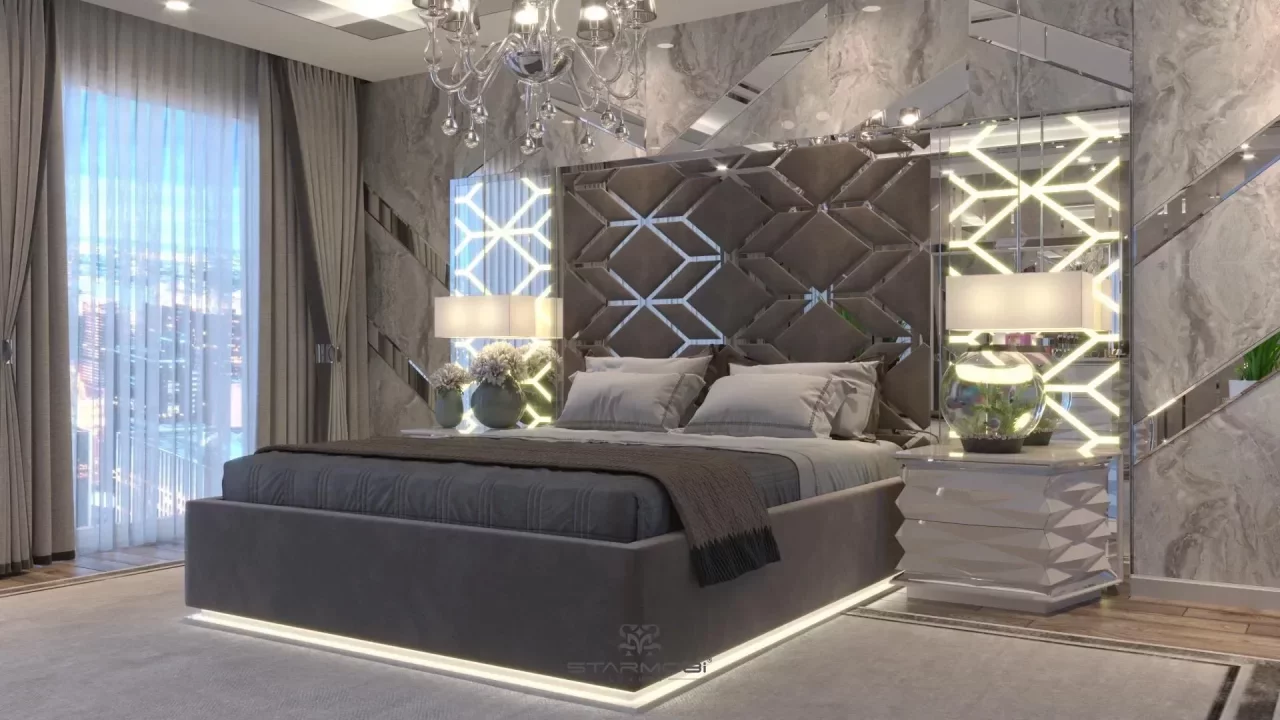
How to choose a headboard: upholstered, wooden and wall-panel types compared, with height and width guidance, fabric choice and care tips.
The headboard is one of the largest vertical surfaces in a bedroom. It is where you rest your back, and it is the piece that ties the bed to the wall. Even so, it is often treated as a detail that simply comes with the set. This guide compares the three main types, upholstered, wooden and wall-panel headboards, in terms of use, size and care.
Start with how you use the bed
If you read, work on a laptop or watch television in bed, the headboard is a backrest and should be soft and tall enough. If the bed is only for sleeping, the headboard is mainly a visual element and a hard surface works just as well. The room matters too: ceiling height, the width of the wall behind the bed, and the position of windows and sockets set the limits. Finally, think about care. With children or pets at home, wipeable surfaces are the safer choice.
Upholstered headboards
An upholstered headboard is a frame covered with foam and fabric or leather. Its main advantage is comfort. Stitching changes the character of the room: vertical channels make the ceiling look higher, horizontal bands widen the wall, and deep buttoning suits classic and neoclassical rooms.
Fabric is the key decision. Velvet and chenille look warm and full, bouclé has a pronounced texture, and linen-look weaves are calmer. Leather can be wiped clean, which makes it practical. Our guide to velvet, bouclé and chenille fabrics and the article on leather or fabric explain how each material behaves; the same criteria apply to headboards. The weak point of upholstery is dust and marks, especially at head height, so choose an easy-clean fabric for light colours and vacuum it regularly with a soft brush.
Wooden headboards
Wooden headboards can be solid wood, veneer or lacquer. Grain adds natural warmth: walnut tones look dark and composed, oak tones light and airy. Lacquer gives a single-colour matt or gloss surface that suits modern rooms. Wood is durable and easy to look after, since a soft, slightly damp cloth is usually enough. Its drawback is hardness. If you sit up in bed for long periods you will need large cushions, or a model that sets a padded panel inside a wooden frame.
Wall-panel headboards
Here the headboard is fixed to the wall instead of the bed, and it usually extends behind the bedside tables or across the whole wall. Panels can be upholstered, veneered, lacquered or mirrored, with metal trims and concealed lighting between them. The result is closer to architecture than furniture.
It also needs the most planning. Sockets, switches and reading lights must be positioned before the panels are made, and the wall, skirting and any radiator or window have to be measured. Because the panels are fixed to the wall, they must be dismantled and adapted if you move. Wall-to-wall solutions are made to measure. STARMOBİ, a manufacturer in production since 1981, offers bespoke solutions made to your measurements and taste, and for panelled walls it helps to plan dimensions, sockets and lighting together with an interior design service.
The three types compared
| Criterion | Upholstered | Wooden | Wall panel |
|---|---|---|---|
| Back comfort | High; made for leaning | Hard; needs cushions | Depends on the panel material |
| Care | Regular dusting, watch for marks | Wipe with a soft cloth | Depends on material; larger surface |
| Visual effect | Soft, warm | Natural, clean-lined | Architectural; covers the wall |
| Planning | Bed size is enough | Bed size is enough | Wall size, socket and lighting plan needed |
| Moving home | Moves with the bed | Moves with the bed | Dismantled and adapted to the new wall |
| Best for | Reading and sitting up in bed | Easy care | Rooms designed as a whole |
Height, width and depth
For height, your head and shoulders should meet the headboard when you sit up, and part of it should remain visible above the pillows. High ceilings can carry a tall headboard; in a low room a very tall one can make the ceiling feel lower. For width, the headboard either ends flush with the bed or runs behind the bedside tables, which looks tidier but needs free wall space. Depth counts as well: a thick padded headboard moves the bed forward and narrows the passage at the foot of the bed. For how bed, base and wardrobe sizes work together, see our guide to dimensions and materials when choosing a bedroom set.
Before you order
- Measure the clear width of the wall behind the bed and the ceiling height.
- Mark sockets, switches and wall lights, and decide which will sit behind the headboard.
- Know the height of the bed base and mattress.
- Look at fabric or veneer samples in the room's own light, by day and in the evening.
- Ask how the headboard is delivered and fitted, with lift and door sizes in mind.
You can browse models in the bedroom collections. To see Italian fabric and leather options side by side, the STARMOBİ showroom at Masko, Block 19A No. 12–14, is open seven days a week from 09:00 to 19:00.
Frequently asked questions
Which headboard suits a small bedroom?
A slim headboard in a light tone, the same width as the bed, takes up the least space. Vertical channels make the ceiling look higher. Very deep padded headboards push the bed forward and narrow the walkway.
Which headboard is more comfortable for reading in bed?
Upholstered headboards are kinder to the back and suit people who sit up in bed for long periods. With a wooden headboard, a model with a padded centre panel or large back cushions gives similar comfort.
How do I decide the height of a headboard?
When you sit up in bed, your head and shoulders should rest against it, and some of the headboard should still be visible above the pillows. Ceiling height and the combined height of the bed base and mattress are considered together.
Can a wall-panel headboard be moved to a new home?
It can be dismantled, but because the panels are made for a specific wall and socket layout, they may need adapting to the new wall. For people who move often, a headboard fixed to the bed is more practical.
Can a headboard be made to measure?
Yes. Height, width, stitching pattern and fabric can all be set to suit the room. STARMOBİ, a manufacturer in production since 1981, offers bespoke solutions made to your measurements and taste.