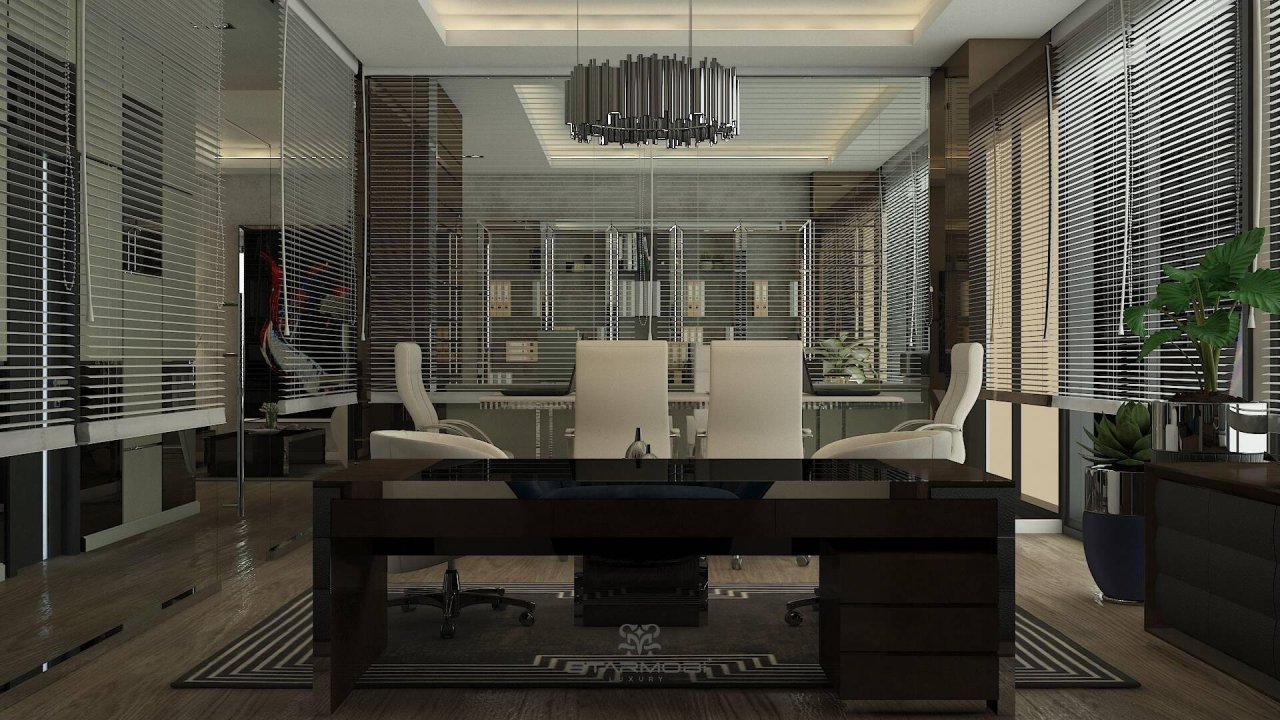
The furniture process for hotels, boutique hotels, residences and offices: survey, measurement, sample approval, production, shipping and installation.
Hotel furniture and contract furniture involve far more than choosing pieces you like. As the room count grows, decisions about dimensions, materials, production order, shipping and installation become tied to one another, and a delay at one stage affects the rest. For the investor this means protecting the budget and the opening date. The interior designer expects the design to reach the site unchanged, and the procurement manager needs a process that can be tracked.
This guide walks through the furniture process for hotels, boutique hotels, residences and offices in order: site survey and measurement, technical drawings, samples and approval, production, shipping, installation and after-delivery support.
What is hotel and contract furniture?
Contract furniture is furniture planned for a commercial space according to a defined design and usage scenario, where many identical units are produced and delivered to the same standard. Hotel furniture is the best-known example. It differs from residential furniture in four ways: heavy use, tight dimensional tolerances, repeated rooms and the expectation of a uniform look. When many rooms of the same type are produced, a small dimensional error is repeated in every room.
The scope is not limited to hotels. Residences, offices, restaurants and cafés follow the same planning logic. The residential side differs in some respects, so we cover it separately in furniture for villa and luxury residential projects.
Ready-made or made to project?
This is usually the first decision. The two routes are not mutually exclusive; in many projects the room furniture is made to order while some complementary pieces are chosen from ready-made ranges.
| Criterion | Ready-made product | Made-to-project production |
|---|---|---|
| Dimensional fit | Limited to standard sizes | Set by site measurements and the room plan |
| Design flexibility | Limited to catalogue options | Shaped by the project's design language |
| Material choice | Selected from existing options | Fabric, leather and veneer chosen for the project |
| Sample and approval | Assessed on the existing product | Drawing and sample approval required |
| Planning effort | Relatively low | Needs early, detailed planning |
| Delivery pattern | Depends on stock | Phased, following the production and shipping schedule |
| Later additions | Easy if the model continues | Possible if dimension and model records are kept |
If dimensions are standard and no special design detail is needed, ready-made products may be enough. Where the space has its own dimensions, a specific design language or a brand standard, made-to-project production is the better fit. For how the two approaches differ in seating, see mass-produced or bespoke sofa set.
Criteria that shape the selection
- Intensity of use: Rooms, lobbies and restaurants are used differently; frames, fabrics and surfaces are chosen accordingly.
- Ease of maintenance: Cleanable surfaces and replaceable components reduce the workload during operation.
- Fire and safety requirements: These vary by project; the project specification and applicable regulations are the reference, and materials are approved against them.
- Brand standards: In chain or concept hotels, dimensions, colours and details follow the brand's guidelines.
- Area types: Standard rooms, suites, lobbies, meeting rooms and restaurants are assessed separately.
Site survey, measurement and technical drawings
The process starts with a briefing attended by the investor, the interior designer and the procurement team. Room types and quantities are fixed and the scope is put in writing. Dimensions on drawings rarely match the building exactly, so columns, service points, door widths and lift sizes are checked on site.
- A sample room is chosen for each room type and measured in detail.
- Electrical and lighting points are compared with the furniture layout.
- The measurement report is shared with the parties and approved.
The design is then turned into production drawings, together with the list of materials, fabrics, leathers, veneers and hardware. Later changes are tracked with revision numbers so everyone works from the same file. If a design team is not yet in place, an interior design service can step in at this stage; what designers look for on the manufacturer side is summarised in criteria interior designers use when selecting manufacturers.
Samples and approval
A product that looks right on a drawing can look different at full size and in real light. A sample lets the team see the design, dimensions and seating comfort on a real piece before production starts. The approved sample becomes the reference for series production. Colours, textures, fabrics and leathers should be judged both in daylight and under the room's own lighting, along with surface quality, edge work and the operation of hardware. Feedback should come through a single channel, and series production should not start without written approval.
Production and timeline
Production time for hotel furniture cannot be given as a single figure; room count, product variety, material supply and special details all determine it. A sound plan is built backwards: the opening date is fixed, then installation, shipping and production are scheduled in reverse. Approval speed, the number of revisions and site readiness affect the timeline most.
- Approval of the measurement report
- Drawing approval
- Sample approval
- Production
- Shipping
- Installation
- Handover and acceptance
Shipping, installation and handover
Shipping needs a plan of its own. Site readiness, storage space and access restrictions should be clear from the start. Each piece is wrapped and labelled by floor and room number. Use of lifts, corridors and the loading area is agreed with the site manager in advance. Damage is checked on delivery and recorded. Installation proceeds room by room, and missing or faulty items are collected in a snag list and closed in a joint inspection.
How to choose a manufacturing partner
- Process clarity: Are the survey, approval and production steps shared in writing?
- Communication: Is there a single point of contact, and how are revisions recorded?
- Samples: Is a sample prepared for approval before production?
- Materials: Are fabric, leather and veneer options offered according to intensity of use?
- After delivery: What is the route for maintenance, repair and additional orders?
The quickest way to get to know a manufacturer is to see the products in person. STARMOBİ began production in 1981, opened its first showroom in 1990 and has been at Masko under the MEP umbrella since 1998, offering bespoke solutions made to measure and to taste. You can see the Italian fabric and leather options at the showroom, Masko 19A Blok No:12–14, and browse examples on the projects page.
Frequently asked questions
Where does a hotel furniture project start?
It starts with a site survey and a briefing. Room types, quantities, concept and usage expectations are clarified at this stage, followed by on-site measurement.
How long does hotel furniture production take?
There is no single answer. Room count, product variety, material supply and approval speed set the timeline; a firm duration becomes clear after the survey and drawing approval.
Why is a sample required in contract furniture?
Design, dimensions and comfort are seen on a real piece, and errors are caught before series production. The approved sample becomes the reference for all later pieces.
When are ready-made products enough?
When dimensions are standard and no special design detail is needed. If the space has its own dimensions or a brand standard, made-to-project production is the better fit.
Can additional pieces or maintenance support be arranged after handover?
That depends on the project records and the agreement with the manufacturer. If dimension, model and sample records are kept, producing additional pieces from the same series becomes easier.
Conclusion
In hotel, residence and office projects, the furniture process is a chain of connected steps from survey to after-delivery support. To talk through the made-to-measure pieces in your project, you can visit the STARMOBİ showroom or reach us through the contact page.
Updated: November 2026