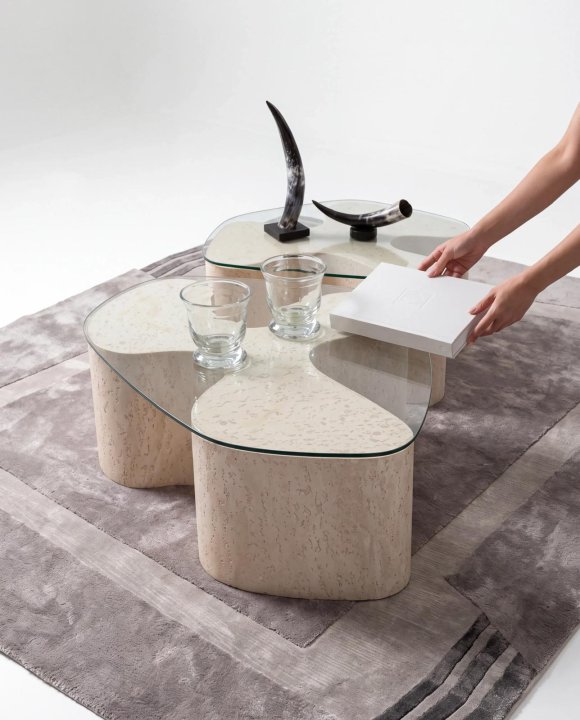
Material and design criteria for selecting a coffee table in luxury living room décor
Choosing a coffee table for a luxury living room is one of the most important decisions in defining the character of the space. Positioned at the centre of the seating arrangement, the coffee table creates a visual relationship with almost every other piece of furniture in the room. Beyond being a functional surface, its material, texture, proportions, and relationship with the overall interior design language directly influence the perception of luxury. The warmth and timelessness of wood, the natural veining and visual richness of marble, and the lightness and transparency of glass each create a different aesthetic expression and suit different lifestyles. For this reason, the right decision should not be based on appearance alone. Durability, maintenance requirements, scale, proportion, and compatibility with the surrounding furniture should all be evaluated together. In this guide, we compare the most popular materials and design approaches for luxury coffee tables, examining their advantages and disadvantages to help you determine which option best suits your interior. Although the coffee table is sometimes treated as a secondary element in interior decoration, it actually plays an important role in establishing the visual hierarchy of a luxury living room. While the sofa and lighting create the main visual framework, the coffee table sits at the centre of this composition and often becomes one of the first focal points. For this reason, factors such as: carry far more importance than they would in an ordinary furniture purchase. Furniture professionals often describe the coffee table as the “signature piece” of the room, because it provides greater freedom for expressing personal taste than many larger pieces of furniture. The warmth of wood, sophistication of marble, or visual lightness of glass can completely change the atmosphere of a living room. Established bespoke furniture manufacturers such as Starmobi, which has been producing in Istanbul since 1981, can also create made-to-measure solutions rather than relying solely on standard collections. This approach allows the coffee table to be designed specifically around the proportions and architectural character of the room. In a luxury living room, the coffee table is not simply a practical piece of furniture. It is an important design element that contributes to the identity of the entire space. Material selection is therefore critical, because every material interacts differently with: Wooden coffee tables are ideal for interiors that aim to create a warm and inviting atmosphere. Solid woods such as: offer both durability and natural visual character. Because the grain pattern is unique to each piece of timber, every table can have a slightly different appearance. Over time, high-quality wood can also develop a natural patina that adds further character. However, wood can require more care when exposed to: Proper finishing and maintenance are therefore important. Marble represents a more architectural and dramatic interpretation of luxury. Its natural veining makes every slab unique, while polished or matte finishes can create different aesthetic effects. Marble works particularly well in: However, it is relatively heavy and can be sensitive to stains, acids, and scratches depending on the type of stone and surface treatment. Glass creates visual lightness. It is particularly effective in: Because transparent surfaces do not visually block the floor or rug beneath them, glass can make a room feel more spacious. Its main disadvantages are practical: The correct choice depends on the character of the room rather than on a single “best” material. Wood remains one of the most popular materials for luxury coffee tables because it creates warmth and works across a wide variety of design styles. Wood introduces visual and tactile softness into the interior. This is particularly effective in living rooms containing: Solid wood has natural grain variation, which means no two pieces are exactly identical. This creates a level of individuality that standard synthetic surfaces cannot easily reproduce. With appropriate finishing and maintenance, a high-quality wooden coffee table can remain visually attractive for many years. Wood can respond to humidity and temperature changes. Poorly treated solid wood may develop: over time. This makes correct finishing particularly important in humid climates. Wooden pieces can also appear visually heavier than glass alternatives, especially in compact spaces. For this reason, scale and proportion must be carefully considered. Marble is one of the strongest visual materials in luxury furniture. The natural pattern of every slab makes each table unique. The veining of natural stone creates a distinctive visual identity. With correct care and surface protection, marble can remain attractive for many years. Marble works with both contemporary and classical interiors. It also combines particularly well with: Marble is naturally porous to varying degrees. Depending on the stone type and finish, it may be sensitive to: It is also heavy, which can make rearranging the furniture more difficult. Standard-size marble tables may also fail to fit larger or unusually shaped seating groups, making bespoke production particularly valuable. Glass coffee tables are popular in contemporary luxury interiors because they create a feeling of openness and visual transparency. They are particularly suitable for smaller urban residences where preserving a sense of space is important. Glass allows light to pass through and reduces visual mass. A glass surface allows decorative elements underneath to remain visible, including: Glass can be combined effectively with: Glass reveals fingerprints, dust, and surface marks more easily than opaque materials. It may therefore require more frequent cleaning. In highly decorative classical interiors, glass can sometimes feel too visually light compared with heavier materials such as marble or solid wood. Scale remains extremely important. An oversized glass surface can still visually dominate the room, while a very small one can appear insignificant next to large sofas. Luxury coffee table design is no longer limited to wood, marble, and glass. Metal and mixed-material solutions are increasingly common. Materials such as: can create elegant, visually lightweight structures. Metal works especially well in modern and minimalist interiors. It is frequently combined with: However, metal finishes should coordinate with the rest of the interior. For example, if the main furniture uses champagne titanium, introducing bright chrome without a clear design reason may weaken the overall visual consistency. Composite surfaces can provide the appearance of natural stone while reducing weight. Mixed-material combinations can include: These combinations can help create visual connections between different furniture pieces throughout the room. In bespoke design, proportions and finishes can be coordinated specifically with the existing sofa, flooring, wall treatments, and lighting. Correct dimensions are just as important as material. A coffee table that is too large can restrict circulation, while one that is too small can appear visually disconnected from the seating group. A commonly used design principle is that the coffee table height should be relatively close to the seat height of the sofa. The table should also be positioned at a comfortable distance so that people can: Standard dimensions do not work for every seating arrangement. This becomes particularly important with: In these cases, bespoke dimensions often provide a much more balanced result. In large luxury living rooms, standard coffee tables can sometimes appear too small. The correct dimensions should respond to: One large coffee table is not always the best solution. Designers often use: to create greater flexibility and visual depth. This approach can be particularly effective in large open-plan living rooms. When standard sizes are unable to provide the correct proportion, bespoke manufacturing makes it possible to design the composition specifically for the room. In smaller spaces, proportion becomes even more important. A table that looks elegant in a large showroom may become visually heavy in a compact apartment. The objective is not simply to select a “small table.” Instead, the design should preserve: Glass or visually lightweight metal structures may be useful in these situations. However, bespoke production can also solve irregular floor plans, including: Custom dimensions can therefore improve both functionality and visual coherence. A coffee table should support the design language of the entire living room. Material selection should therefore respond to the existing furniture and architecture. Often work well with: Often work well with: Often work well with: The shape is equally important. Possible forms include: The shape should correspond with both the seating layout and circulation. In classical luxury living rooms, the coffee table often acts as a visual anchor. Materials such as: can create the necessary visual weight. Wood introduces warmth and timelessness, while marble provides a more monumental and prestigious expression. Glass can also be used, but it should be carefully integrated into the wider material palette. The key is not to choose one material in isolation. Instead, the table should coordinate with: Even the most expensive table can disturb the room if its proportions are incorrect. Modern and minimalist interiors generally follow a “less but better” philosophy. The coffee table should reinforce the simplicity of the room rather than compete with it. Typical characteristics include: Glass creates openness. Marble can act almost like a sculptural art object. Wood introduces warmth into otherwise minimal interiors. The correct material should be selected according to the atmosphere required. The table should also leave enough negative space around it so that the room continues to feel calm and spacious. Ready-made furniture often requires compromise. The dimensions of the room, existing sofa proportions, rug design, and daily habits of the homeowner may not align perfectly with standard products. This is where bespoke coffee-table design becomes particularly valuable. A custom table can be developed around: This removes many of the proportion problems associated with standard furniture. Custom production allows control over: An experienced manufacturer can translate the client’s aesthetic concept into a technically feasible piece of furniture. According to the source, Starmobi’s bespoke model focuses on combining design consultancy with manufacturing capability to produce pieces specifically adapted to the living space. Material and scale should always be considered together. A beautiful material alone does not guarantee a successful result. Provides: but requires appropriate protection. Provides: but needs maintenance and careful handling. Provides: but requires more frequent cleaning. The correct result comes from matching the material to: This is one of the key areas where bespoke production offers an advantage over standard furniture. The source identifies three central criteria: Material quality + design compatibility + correct dimensions The material should match the desired atmosphere and practical requirements. The coffee table should belong visually to the same design language as the rest of the interior. The table must be correctly scaled relative to both the sofa and the room. In cases where standard products cannot achieve the required proportions, made-to-measure production becomes particularly useful. There is no single material that is always the best choice. The correct decision depends on the interior. You want: You want: You want: You want: Your living room has: In these cases, custom production can provide significantly better proportions and stronger visual integration. Choosing a coffee table for a luxury living room cannot be reduced to one “correct” material. The timeless warmth of wood, the architectural richness of marble, and the contemporary lightness of glass and metal each respond to different lifestyles and design concepts. The strongest decision comes from evaluating three factors together: Material quality + design harmony + correct proportion Rather than following short-term trends, select a table that responds to the architecture, furniture, and everyday use of the space. For projects where standard furniture cannot provide the required dimensions or design flexibility, working with an experienced bespoke manufacturer can significantly improve the relationship between the coffee table and the surrounding interior. The source positions Starmobi, an Istanbul-based manufacturer operating since 1981, as one example of this bespoke approach, particularly for clients seeking custom dimensions, material combinations, and project-specific furniture design.How to Choose a Coffee Table for a Luxury Living Room: Wood, Marble, Glass or Bespoke Design?
Why Does the Coffee Table Define the Character of a Living Room?
Material Criteria When Choosing a Coffee Table
Wood vs. Marble vs. Glass
Wood
Marble
Glass
Wooden Coffee Tables: Advantages and Disadvantages
Advantages
Natural Warmth
Unique Character
Long-Term Value
Disadvantages
Marble Coffee Tables: Advantages and Disadvantages
Advantages
High Aesthetic Value
Durability
Design Flexibility
Disadvantages
Glass Coffee Tables: Advantages and Disadvantages
Advantages
Visual Lightness
Preserves the View of the Floor
Works Well With Modern Materials
Disadvantages
Metal, Composite, and Mixed-Material Coffee Tables
Metal Bases and Structures
Composite and Mixed Materials
Coffee Table Dimensions: What Should You Consider?
Relationship With the Sofa
Coffee Tables for Large Living Rooms
Coffee Tables for Compact Living Rooms
Design Harmony: Integrating the Coffee Table With the Living Room
Wooden Coffee Tables
Marble Coffee Tables
Glass Coffee Tables
Coffee Tables in Classical Luxury Interiors
Coffee Tables in Modern and Minimalist Interiors
Material Balance
Bespoke Coffee Tables: The Value of Custom Design
Why Choose Bespoke?
Coordinating Materials and Design in a Bespoke Project
Wood
Marble
Glass
What Do Interior Designers Look for When Choosing a Coffee Table?
Material
Design Compatibility
Proportion
Final Recommendations: How to Choose the Right Coffee Table
Choose Wood If:
Choose Marble If:
Choose Glass If:
Choose Mixed Materials If:
Choose Bespoke Production If:
Conclusion
Güncellendi: Eylül 2026